
If you have ever wondered how people can lend or borrow digital assets without visiting a bank, DeFi lending is a good place to start.
DeFi, short for decentralized finance, uses blockchain networks and smart contracts to provide financial services without relying on one central institution. Instead of a bank employee reviewing an application, software follows a set of rules that are visible on the blockchain.
That can give people more control over how they manage digital assets. It can also bring new responsibilities and risks. DeFi is not a shortcut around careful financial decisions. Understanding the system is the first step.
What Is DeFi Lending?
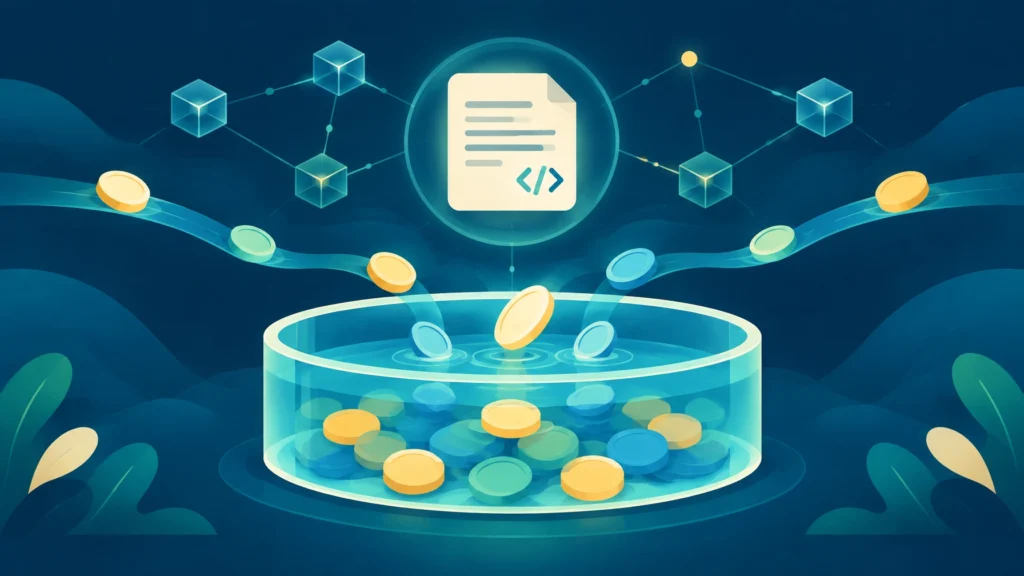
DeFi lending is a system where people supply digital assets to a shared lending pool. Other users may borrow from that pool by locking up collateral.
A lending pool is managed by a smart contract. Think of it as a digital container with written rules. The contract can track deposits, calculate interest, check collateral, and manage repayments without a loan officer.
There are usually two sides:
- Lenders supply digital assets to a pool.
- Borrowers deposit collateral and request another digital asset from the pool.
The pool does not work like a traditional bank savings account. There is no bank deciding which customer receives a loan. The smart contract applies the same programmed rules to every wallet that interacts with it.
For a plain-language introduction to what decentralized finance is, start here.
How Does Decentralized Lending Work?
Here is a simple step-by-step example.
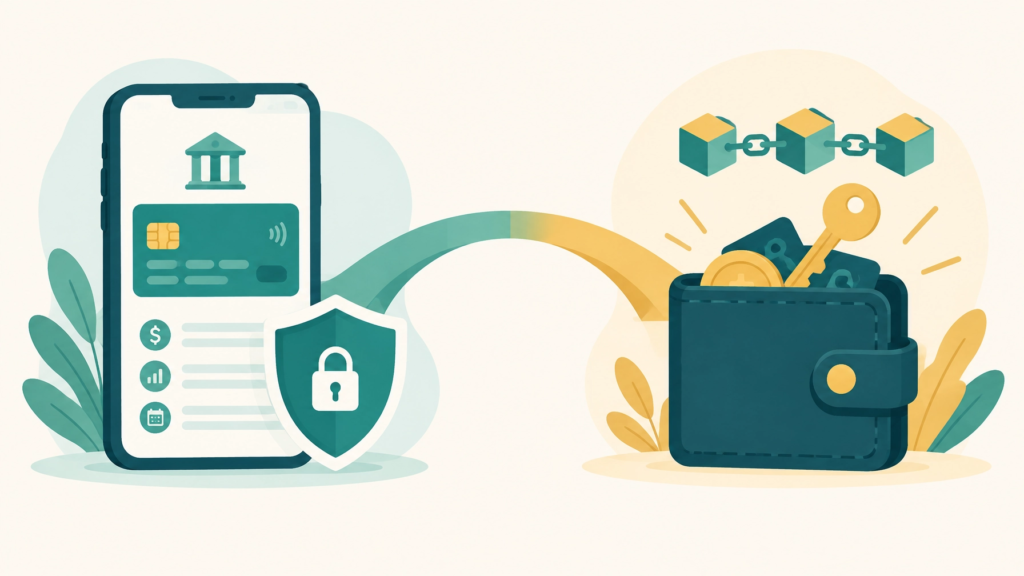
1. A user connects a digital wallet
The user connects a wallet to a DeFi lending application. The wallet holds the assets and approves transactions. In a self-custody setup, the user remains responsible for the wallet and its private keys.
This is one part of the “be your own bank” idea: you interact directly with an open financial system rather than placing every request through a traditional bank. However, control also means responsibility. Lost keys, incorrect addresses, or unsafe approvals can create serious problems.
2. Assets are placed into a pool
A lender deposits a supported digital asset into a lending pool. The asset becomes available for eligible borrowers under the pool’s rules.
Some protocols issue a receipt token showing the user’s share of the pool. The exact design varies from one protocol to another, so it is important to read the documentation before connecting a wallet or approving a transaction.
3. A borrower supplies collateral
Most DeFi loans are overcollateralized. This means the borrower must lock up more value than the amount borrowed.
For example, a borrower might deposit one digital asset as collateral and borrow a different asset from the pool. The protocol sets a borrowing limit based on the type of collateral, its current market price, and the required safety level.
This structure is used because the protocol generally does not rely on a credit score, employment history, or personal relationship with the borrower. Instead, the collateral helps protect the pool.

4. The smart contract checks the rules
A smart contract is blockchain-based software that carries out instructions when specific conditions are met.
In DeFi lending, it may:
- Record deposits and withdrawals
- Set borrowing limits
- Track collateral values
- Calculate the current interest rate
- Process repayments
- Trigger liquidation when a position becomes too risky
There is no loan officer making a personal decision. The user qualifies based on the rules of the protocol and the assets in the wallet.
5. Repayment releases the collateral
When the borrower repays the borrowed asset and the required interest, the collateral can usually be withdrawn, subject to the protocol’s rules and available liquidity.
If the borrower does not repay, or if the collateral loses too much value, the position may become unsafe. That can lead to liquidation.
How Are Interest Rates Set?
DeFi lending rates are commonly variable. They can change as the supply of assets and demand for borrowing change.
A simple way to understand this is:
- If many assets are available and fewer people are borrowing, the rate may move lower.
- If many people want to borrow and fewer assets are available, the rate may move higher.
The rate shown in an application is not necessarily fixed for the life of a loan. Borrowers need to understand that their cost can change. Lenders also need to understand that the rate associated with a pool can change over time.
This is different from a traditional loan with a clearly fixed rate. Before using any lending protocol, review how its rate model works and whether rates can change quickly.
What Is Liquidation?
Liquidation happens when a borrower’s position no longer meets the protocol’s safety requirements.
Suppose a borrower deposits a volatile digital asset as collateral. If the market price falls sharply, the collateral may no longer provide enough coverage for the loan. The smart contract can then allow liquidators to sell part of the collateral and use the proceeds to help repay the debt.
The borrower may also face a liquidation fee or lose part of the collateral. This process is designed to protect the lending pool, but it can be costly for the borrower.
Liquidation is one reason borrowers should avoid using the maximum amount available. A larger safety cushion may give a position more room during normal market movement, but it does not remove the risk.
Main Risks of DeFi Lending
DeFi lending can operate without a central bank or loan department, but that does not make it risk-free.
Smart contract risk
A smart contract may contain a coding error, design weakness, or security vulnerability. An exploit could cause funds to be stolen, frozen, or incorrectly distributed.
Audits and a long operating history may provide useful information, but they do not guarantee that a protocol is safe.
Collateral volatility
Digital asset prices can move quickly. A sudden decline in collateral value can lead to liquidation, even if the borrower expected to repay later.
Stablecoin depeg risk
Stablecoins are designed to track a reference value, often the U.S. dollar. However, a stablecoin can lose that connection, known as a depeg.
A depeg may affect borrowers and lenders in different ways. The asset used as collateral may fall in value, or the asset held in a pool may be worth less than expected.
Variable interest rates
Rates can change with supply and demand. A borrowing cost that looks manageable today may become more expensive if demand rises or available liquidity falls.
Wallet and transaction risk
Sending assets to the wrong address, approving a fake application, or signing a harmful transaction can result in permanent loss. Blockchain transactions are generally difficult or impossible to reverse.

Beginner Checklist Before You Start
Use this checklist as a learning tool:
- Learn the difference between a wallet, a token, a protocol, and a smart contract.
- Confirm that you are visiting the official website and application.
- Read the protocol’s documentation before connecting your wallet.
- Check which blockchain and digital assets the protocol supports.
- Understand whether the interest rate is variable.
- Learn the collateral and liquidation rules.
- Leave a safety cushion instead of borrowing the maximum amount.
- Review smart contract audits, security history, and community information.
- Start with an amount you can afford to lose while learning.
- Keep your private keys and recovery phrase offline and secure.
- Research your own tax and legal responsibilities.
- Never sign a transaction you do not understand.
Decentralized finance can give you more direct control over digital assets and reduce dependence on a single financial gatekeeper. But being your own bank also means checking the rules, protecting access, and accepting responsibility for each transaction.
BridgeToWeb3 helps beginners understand Web3, digital finance, and decentralized banking in plain language. You can learn more about BridgeToWeb3 or read our beginner-friendly explanation of how digital money is opening doors for the unbanked.
DeFi Lending FAQ
Do I need a bank account to use DeFi lending?
Typically, DeFi applications use a digital wallet rather than a traditional bank account. Access requirements vary by protocol and location. You are still responsible for following applicable laws and regulations.
Can I borrow without collateral?
Most standard DeFi lending is overcollateralized. Some specialized products may use different models, but they often involve additional complexity and risk.
Is the interest rate fixed?
Usually not. Many DeFi lending protocols use variable rates that respond to supply and demand.
Can my collateral be liquidated?
Yes. If the collateral value falls below the protocol’s required level, the smart contract may liquidate some or all of it.
Is DeFi lending safe?
No financial system is completely risk-free. Smart contract failures, market volatility, stablecoin depegs, variable rates, scams, and user mistakes can all lead to losses. Do your own research before using any protocol.
Is BridgeToWeb3 a bank?
No. BridgeToWeb3 is an educational platform that helps people understand digital finance, blockchain, and Web3 concepts.
Important Disclaimer
This article is for educational purposes only and is not financial advice. WeFi is not a bank. Accounts and digital assets are not covered by FDIC insurance. Digital assets carry risk, including the possible loss of funds. There are no guarantees. Always do your own research and consider speaking with a qualified professional about your individual situation.
Ready to Learn More? Join Our Free Educational Zoom Calls!
Mark Your Calendar! Every Monday and Thursday at 8:00 PM ET / 7:00 PM CT.
Learn directly how to navigate the world of digital finance and decentralized banking in a simple, no-hype environment.
Call to action (safe next step)
Sign up for your free decentralized account. Visit Our Website: bridgetoweb3.com.