
If you have ever opened a banking app, sent money through your phone, or heard someone mention stablecoins and CBDCs, you may have wondered: What kind of digital money am I actually using?
Is it a stablecoin? A future central bank digital currency? Or simply the same dollars from your bank account displayed on a screen?
The answer depends on who issued the money, who controls the system, and where the balance is recorded.
This guide explains the differences in simple language so you can better understand the money moving through your phone, without the hype.
What does “digital dollar” mean?
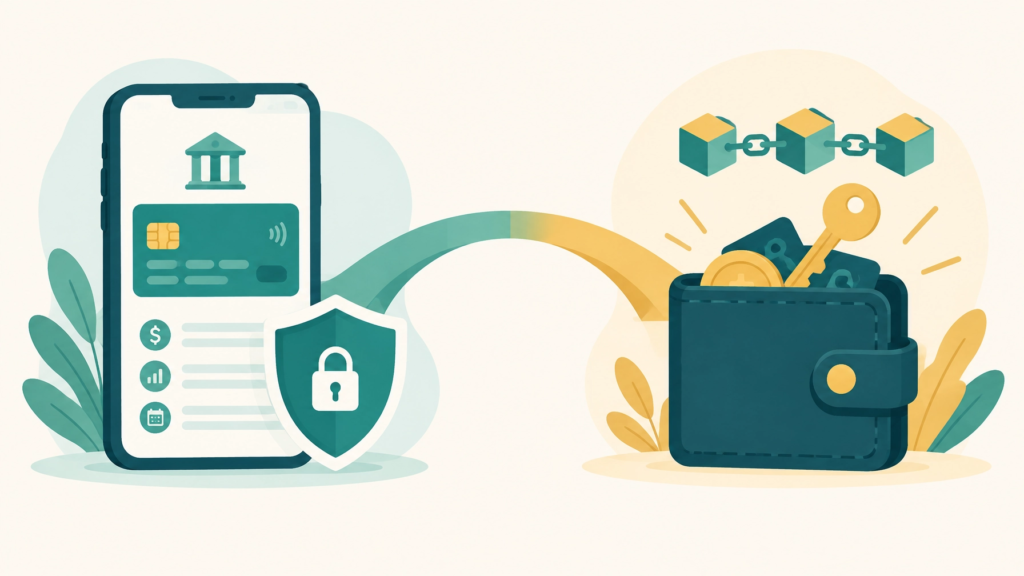
A digital dollar is not one single product. In everyday conversations, the term can refer to three different forms of dollar-denominated money:
- Regular bank balances recorded electronically by a commercial bank
- Stablecoins issued by private companies and transferred on blockchain networks
- Central bank digital currencies, or CBDCs, issued directly by a central bank
Your checking account balance is already digital. When you use a debit card or banking app, you are usually moving electronic bank money rather than physical cash.
A stablecoin is different. It is a digital token designed to track the value of a currency, often the U.S. dollar. Examples include USDT- or USDC-style tokens.
A CBDC would be a digital form of central bank money made available to the public. The Federal Reserve describes a CBDC as a digital liability of a central bank that is widely available to the general public. In the United States, a retail CBDC has been studied and debated, but the design and policy questions remain important.

Stablecoins, CBDCs, and bank balances: the simple comparison
| Question | Regular bank balance | Stablecoin | CBDC |
|---|---|---|---|
| Who issues it? | Commercial bank or credit union | Private company or organization | Central bank |
| Where is it recorded? | The bank’s internal ledger | A blockchain or related digital network | A central-bank or approved payment system |
| Who controls access? | The bank controls the account system | A platform, wallet provider, or you through self-custody | Likely approved intermediaries and the central-bank system |
| What supports its value? | Bank obligations, regulation, and possible deposit insurance | Reserves, collateral, or another stabilization design | Direct central-bank liability |
| Can it be frozen? | The bank may restrict access under its policies or legal requirements | A provider or token issuer may restrict transfers; self-custody also depends on the token’s design | The final rules would depend on its legal and technical design |
| What happens if something breaks? | The bank may have recovery procedures, support, and regulated processes | You may face an outage, lost keys, network problems, or redemption delays | A major system outage could affect many users; resilience would be essential |
1. Regular bank balances
When you see $500 in your checking account, that balance is generally a claim against your bank. The bank keeps a record showing that it owes you that amount, subject to the account terms and applicable laws.
Bank accounts are familiar and convenient. They can connect to debit cards, bill payments, direct deposits, and cash withdrawals. Eligible deposits at FDIC-insured banks may receive insurance up to applicable limits, but that protection does not automatically apply to every financial product or digital wallet.
The tradeoff is that the bank controls the account system. A bank may pause or restrict an account because of suspected fraud, legal requirements, identity checks, technical problems, or its own policies.
2. Stablecoins
Stablecoins are privately issued digital tokens designed to maintain a target value, often close to one U.S. dollar.
People use stablecoins to move dollar-linked value across blockchain networks, send money internationally, pay some online businesses, or explore decentralized tools. Our guide to using stablecoins for digital transfers explains the basics.
However, “stable” does not mean risk-free or guaranteed. A stablecoin still depends on the issuer, its reserves, the redemption process, the blockchain network, the wallet or platform you use, and your own security habits. Some stablecoins also include controls that can restrict certain addresses or transfers.
3. Central bank digital currencies
A CBDC would be issued by a central bank rather than a private company. It could offer a new form of digital public money, but it also raises important questions about privacy, cybersecurity, transaction monitoring, and how much control a central system should have over everyday payments.
The design matters. A CBDC could be account-based or token-based, and it could include limits, identity checks, or privacy features. That is why the label alone does not tell the whole story.
Why self-directed digital money appeals to people
For many users, the appeal of self-directed digital money is simple: more choice, more flexibility, and more direct control.
Traditional banking can involve intermediaries, policies, delays, and geographic limits, especially for cross-border payments. Blockchain-based assets can make it possible to move value directly between wallets without following the same path as a traditional bank transfer.
Self-custody can support the goal of being your own bank, but it also means taking responsibility. If you lose a recovery phrase, approve a scam, or send funds on the wrong network, there may be no customer support team that can undo the mistake.
The goal is not to replace every financial tool. It is to understand your options and choose the systems that best fit your needs and comfort level.

Beginner checklist: questions to ask before using digital dollars
Before holding or sending any digital-dollar product, ask:
-
Who issued it?
Is it a commercial bank, a private stablecoin company, a wallet provider, or a central bank? -
Who controls access?
Can you manage the asset yourself, or does a company control the account and keys? -
What protects its value?
Learn whether it is backed by deposits, short-term assets, collateral, or another structure. -
Can it be frozen or restricted?
Review the provider’s terms and understand whether the issuer can block transfers or addresses. -
Which network does it use?
Confirm that the wallet, token, and blockchain network all match before sending funds. -
What happens if the service or network goes offline?
Look for information about outages, recovery, redemption, and customer support. -
Can you afford to lose access or value?
Never use money needed for essentials while learning a new financial system.
Start slowly. Use strong account security, enable two-factor authentication where available, and never share a private key or recovery phrase.
FAQ: Digital dollars in plain English
Are the dollars in my bank app already digital dollars?
Yes. A bank account balance is electronic money recorded in a commercial bank’s system. It is different from a stablecoin and different from a CBDC.
Is a stablecoin the same as a CBDC?
No. A stablecoin is privately issued and usually designed to track the value of a currency. A CBDC would be issued by a central bank and would represent a direct claim on that central bank.
Can stablecoins lose their value?
Yes. A stablecoin can move above or below its target value, become difficult to redeem, or face problems involving reserves, technology, regulation, or the issuing organization.
Would a CBDC give people complete privacy?
Not necessarily. Privacy would depend on the final design, laws, intermediaries, and data policies. Privacy and transaction monitoring are major issues in CBDC discussions.
Is self-custody automatically safer?
No. Self-custody can provide more direct control, but it also places responsibility for security and recovery on you. A custodial service may be easier to use, but you must trust the provider.
Final thoughts
“Digital dollar” is a broad phrase. It might describe the balance in your bank app, a privately issued stablecoin, or a future central bank digital currency.
The most important question is not simply whether money is digital. It is:
Who issued it, who controls it, how is it protected, and what happens when something goes wrong?
Learning those basics can help you make more informed decisions as banking, blockchain technology, and digital payments continue to evolve. For more beginner-friendly education, explore our guides on Web3 and the future of the internet, stablecoin transfers across borders, and self-custody versus custodial wallets.
This article is for educational purposes only and is not financial advice. WeFi is not a bank and is not FDIC insured. Digital assets carry risks, including loss of value, loss of access, fraud, technology failure, and regulatory changes. No guarantees of any kind are made or implied.
Ready to Learn More? Join Our Free Educational Zoom Calls!
Mark Your Calendar! Every Monday and Thursday at 8:00 PM ET / 7:00 PM CT.
Learn how to navigate digital finance and decentralized banking in a simple, no-hype environment.
Call to action (safe next step)
Sign up for your free decentralized account. Visit Our Website: bridgetoweb3.com.