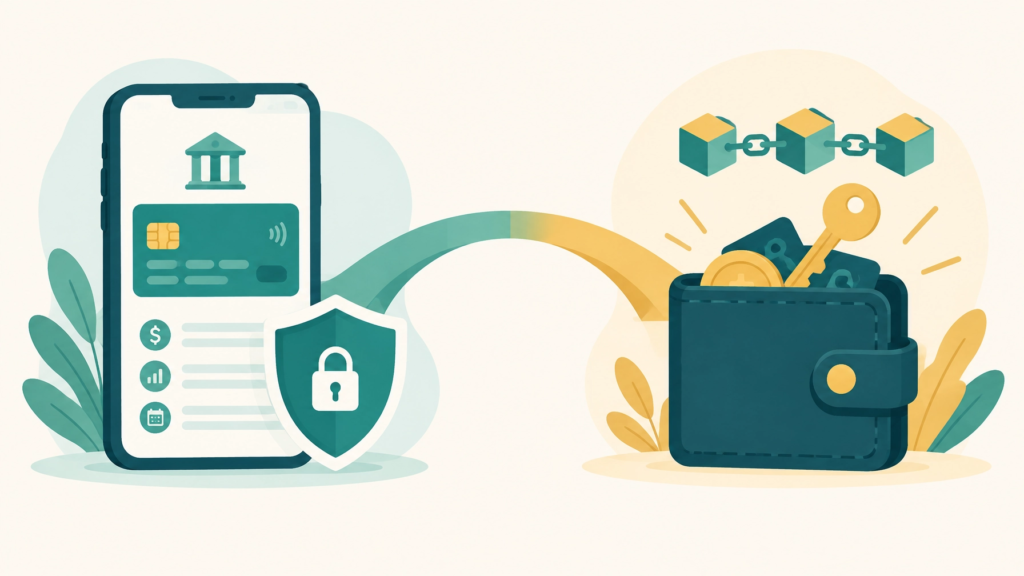

Digital money can feel like one more thing to keep track of. You may have a checking account, a payment app, and perhaps a wallet holding stablecoins or other digital dollars. The good news is that you don’t need a complicated system to get organized. A simple budget, clear categories, and a regular review can help you see where your money is and what it’s for.
Stablecoins are digital assets designed to track the value of a currency, often the U.S. dollar. They can offer another way to hold or move value, including outside traditional banking networks. But “stable” doesn’t mean risk-free, and a stablecoin is not automatically the same as cash in an insured bank account. For a quick introduction, see our guide to digital dollars, stablecoins, and CBDCs.
Start with one complete money picture
Begin by listing the places where you receive, keep, or spend money. Include bank accounts, cash, payment apps, and digital wallets. You don’t need to combine them into one account; you’re simply creating a clear view of your finances.
Then record what comes in and what goes out. A spreadsheet, notebook, or budgeting app can work. For each transaction, note the date, amount, where it happened, and its purpose. Useful spending categories might include:
- Income: wages, freelance payments, benefits, or payments received in digital assets.
- Essentials: housing, food, utilities, transport, and healthcare.
- Planned savings: money set aside for goals or unexpected expenses.
- Digital activity: purchases, transfers, swaps, and network or platform fees.
If you receive a digital asset as payment, record what you received and its value in your local currency at the time. The IRS digital assets guidance explains that digital-asset transactions may have tax reporting implications in the United States. Rules vary by country, so keep your records and check the guidance that applies where you live.
Separate money by purpose
A helpful habit is to give each part of your money a job. Keep track of what is set aside for regular bills, everyday spending, savings, and planned digital-asset use. Clear labels in a spreadsheet or separate accounts and wallets can help prevent confusion.
For example, money needed for rent next week should not be mixed up with a small balance you’re using to learn how digital transfers work. Keep essential bill money somewhere suitable for paying those bills, and don’t assume a stablecoin can always be converted to cash immediately at the value you expect.
A digital wallet can provide more direct control over assets when you manage the keys yourself. That control also comes with responsibility: lost recovery information, a compromised device, or a transfer to the wrong address can be difficult or impossible to reverse. If you’re comparing options, read our guide to using stablecoins for digital transfers.
Keep records as you go
Small notes made along the way are easier to manage than a pile of unlabelled transactions later. For a digital transaction, record:
- The date and amount
- The asset and network used
- The wallet or platform
- The purpose of the transaction
- Any fees
- A transaction reference, if available
Be clear about transfers between your own wallets. They may look like spending in an app, even when the money has only moved from one place you control to another. Save monthly statements or transaction exports in a secure location. Keep sensitive information, especially wallet recovery phrases, out of ordinary notes, email, and screenshots.
Use wallets carefully and start small
Before using a wallet or service, learn who controls access to it, what fees may apply, and what happens if you lose your device or can’t access your account. Choose strong, unique passwords, turn on available security features, and be cautious with links and messages claiming to offer wallet support. Never share a private key or recovery phrase with someone who contacts you.
When learning how to send digital assets, verify the address and network before confirming. If you choose to try a transfer, start with an amount small enough that losing it would not affect your bills or other essentials. A small test may help you understand the steps, but it does not remove the risks. The California Department of Financial Protection and Innovation shares additional digital wallet safety tips.
Make a regular review part of your routine
Once a week, take a few minutes to check recent transactions, label anything unclear, and compare wallet balances with your records. Once a month, look at your spending categories, note fees, and update your plan if your income or expenses have changed.
This routine can help you spot mistakes and understand how digital activity fits into your everyday finances. It also gives you a chance to check whether the amount you keep in a wallet still matches its intended purpose. As with any financial tool, consider what you can afford to have exposed to risk.
Beginner checklist
- List your bank accounts, payment apps, and digital wallets.
- Write down income and expenses as they happen.
- Separate bill money, everyday spending, savings, and digital-asset use.
- Record digital transactions, including fees and the asset’s value when received.
- Secure your device and wallet; never share recovery information.
- Verify the address and network before sending.
- Start with a small test transfer only if you’re comfortable with the risks.
- Review and reconcile your records weekly, then update your budget monthly.
FAQ
Do I need a special budgeting app for digital dollars?
No. A notebook or spreadsheet can be enough to begin. Choose a method you’ll actually keep using, and include digital-wallet activity alongside your regular income and expenses.
Is a stablecoin the same as cash in my bank account?
No. A stablecoin is a digital asset designed to track a currency’s value. Its price, redemption options, and protections can depend on the issuer, platform, and other factors.
Should I keep all my savings in a digital wallet?
Don’t assume a wallet or digital asset is appropriate for emergency savings or upcoming bills. Consider access, security, and potential loss before deciding where to keep money you may need.
Do I need to keep records if I only make small transactions?
Keeping records is a useful habit, even for small amounts. In the United States, some digital-asset transactions may need to be reported; rules depend on the activity and your circumstances.
This article is for educational purposes only and is not financial advice. WeFi is not a bank, and accounts or digital assets through WeFi are not FDIC insured. Digital assets carry risk, including the risk of losing value or access. No guarantees are made.
Ready to Learn More? Join Our Free Educational Zoom Calls!
Mark Your Calendar! Every Monday and Thursday at 8:00 PM ET / 7:00 PM CT.
Learn directly how to navigate the world of digital finance and decentralized banking in a simple, no-hype environment.
Call to action (safe next step)
Sign up for your free decentralized account. Visit Our Website: bridgetoweb3.com.