
SEO title: How to Use Stablecoins: A Beginner’s Guide to Digital Dollars
Meta description: Learn how to use stablecoins for everyday digital money, including wallets, transfers, payments, fees, security, and important risks.
If you have heard people talk about “digital dollars” but are not sure how they work, you are not alone. Stablecoins are one of the simplest ways to begin understanding digital finance because they are designed to track the value of a familiar currency, usually the U.S. dollar.
This guide explains how to use stablecoins in plain English. You will learn what stablecoins are, how to get them, how to send and receive them, and what to check before using them.
This is educational content only and is not financial advice. Digital assets carry risk, including the possible loss of value or access to funds. Nothing in this article guarantees any outcome.
What are stablecoins?
A stablecoin is a digital asset designed to maintain a relatively steady value. Many dollar-linked stablecoins aim to remain close to $1, although their prices can move above or below that amount.
Unlike assets such as Bitcoin or Ether, which can experience large price changes, stablecoins are built around a reference asset. That reference may be a government currency, a commodity, or another type of reserve.
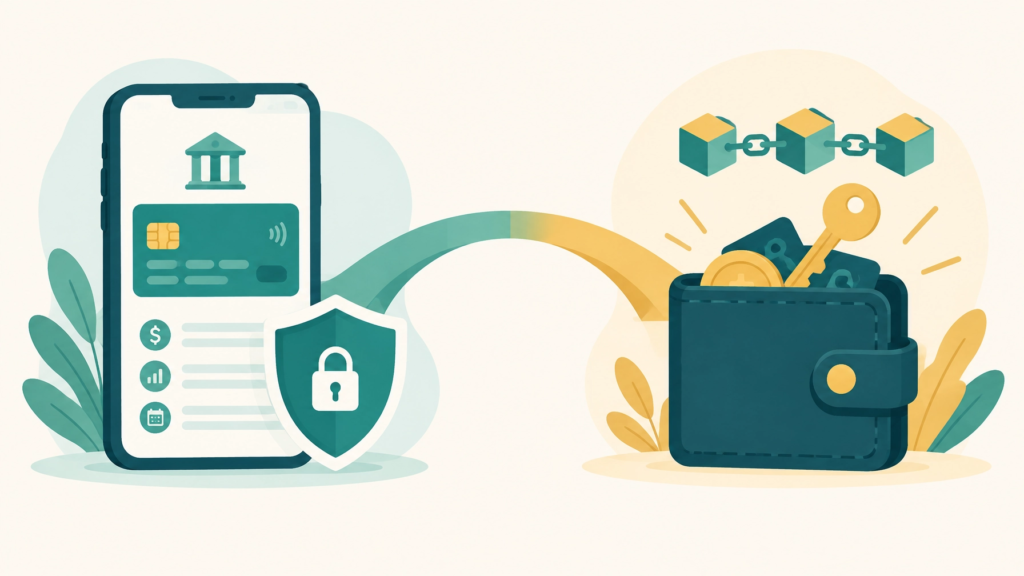
Most stablecoins are created by private companies and operate on blockchain networks. A blockchain is a shared digital record that allows people to send and receive assets without using the same payment process as a traditional bank.
The Kansas City Federal Reserve’s beginner guide to stablecoins explains that stablecoins are commonly backed by reserves such as deposits, money market funds, or short-term government securities. However, each stablecoin has its own structure, issuer, disclosures, and risks.
A simple way to think about stablecoins is this:
Stablecoins are digital tokens that may allow you to move dollar-linked value using blockchain networks.
Why do people use stablecoins?
Stablecoins may be useful for several everyday digital money activities:
- Sending money to someone in another country
- Paying a freelancer or online service provider
- Moving value outside regular banking hours
- Holding a dollar-linked digital asset in a wallet
- Learning how blockchain-based payments work
- Moving between different digital assets without immediately returning to a bank account
They can also give people more direct control over how they store and move money. With a self-custody wallet, you control the access keys instead of relying entirely on a bank or platform. This is part of the “be your own bank” idea behind decentralized finance.
That independence also comes with responsibility. If you use self-custody, there may not be a traditional customer-service department that can reverse a transaction or restore a lost recovery phrase. More control means you must take security seriously.
Stablecoins do not remove financial rules, taxes, identity checks, or consumer responsibilities. They are simply another way to hold and transfer digital value.
How stablecoin wallets work
A wallet is an app, device, or account that helps you manage digital assets. Your stablecoins are recorded on a blockchain, while the wallet stores the keys that allow you to access and move them.
There are two broad wallet types.
Custodial wallets
With a custodial wallet, a company holds the keys for you. You typically sign in with an email address, password, and additional security steps.
This can feel familiar and may be easier for beginners. Some custodial services also provide account recovery support. The tradeoff is that you must trust the company to protect your funds and provide access under its policies.
Self-custody wallets
With a self-custody wallet, you control the keys. You may receive a recovery phrase made up of several words. Anyone who has that phrase may be able to access the wallet.
Self-custody can provide greater independence from centralized financial platforms, but it also means you are responsible for backups, device security, and transaction accuracy. If you lose the recovery phrase, access may be impossible to restore.
Our guide to choosing a stablecoin wallet explains these tradeoffs in more detail.

How to use stablecoins: A simple process
The exact steps vary by wallet, provider, country, and stablecoin. In general, the process looks like this.
1. Learn about the stablecoin first
Before buying or receiving anything, review the stablecoin’s official information.
Look for:
- What asset the stablecoin is designed to track
- Who issues it
- How reserves are described
- Whether reserve reports or attestations are available
- Which blockchain networks support it
- How you can convert it back to traditional currency
- What fees, limits, or regional restrictions apply
“Stable” does not mean risk-free. A stablecoin may lose its intended value, experience liquidity problems, face issuer difficulties, or become harder to redeem.
2. Choose a wallet or platform
Select a wallet or service that supports both your chosen stablecoin and the blockchain network you plan to use.
For example, the same stablecoin name may be available on more than one network. Sending a token on the wrong network can create serious problems, including delayed recovery or permanent loss.
If you are completely new, you may prefer a reputable custodial platform while learning the basics. If personal control is your priority, you may explore self-custody after understanding recovery phrases and wallet security.
3. Add funds carefully
Many platforms allow users to exchange traditional currency for stablecoins through a bank transfer, debit card, or another payment method. This is sometimes called an “on-ramp.”
Review the total cost before confirming:
- Purchase fees
- Spread or exchange-rate differences
- Network fees
- Withdrawal fees
- Minimum transfer amounts
Never assume that a low blockchain fee means the entire transaction is free.
4. Send a small test transfer
To send stablecoins, you generally need the recipient’s wallet address or QR code.
Before sending:
- Confirm the stablecoin name.
- Confirm the blockchain network.
- Copy or scan the recipient’s address carefully.
- Compare the first and last few characters of the address.
- Check the amount and fee.
- Send a small test amount first when practical.
- Wait for confirmation before sending more.
Blockchain transactions are often difficult or impossible to reverse. A test transfer may help you catch a wrong address or network before making a larger payment.
5. Receive, spend, or convert
Once the recipient receives the stablecoins, they may be able to hold them, send them elsewhere, use them with a participating merchant, or convert them into local currency through an available service.
Not every merchant accepts stablecoins, and not every platform supports every country or currency. Before relying on stablecoins for a bill or emergency payment, confirm how the recipient will use or convert them.

Beginner checklist for using stablecoins
Use this checklist before your first transaction:
- Read the stablecoin’s official information and risk disclosures.
- Confirm the issuer, reserves, and redemption process.
- Choose a wallet that supports the correct token and network.
- Turn on two-factor authentication where available.
- Use a strong, unique password.
- Never share a self-custody recovery phrase or private key.
- Confirm the recipient’s address through a trusted channel.
- Check the network before sending.
- Start with a small amount.
- Review fees before confirming.
- Keep records of purchases, transfers, and conversions.
- Understand how you would convert the stablecoin back to local currency.
- Be cautious with websites or people promising guaranteed returns.
This checklist is not a guarantee of safety, but it can help reduce common beginner mistakes.
Important risks to understand
Stablecoins may feel simpler than other digital assets, but they still involve risk.
Issuer risk: You rely on the company or organization behind the stablecoin to operate properly and manage its reserves.
Loss of the intended value: A stablecoin can trade above or below its target value. In difficult market conditions, it may not remain close to $1.
Wallet risk: A hacked account, stolen password, phishing scam, or lost recovery phrase can lead to loss of access.
Network risk: Blockchain congestion, technical failures, or incorrect network selection can delay or disrupt a transaction.
Platform risk: A custodial provider may limit withdrawals, freeze an account, experience an outage, or change its policies.
Regulatory risk: Laws and rules for stablecoins continue to develop. Availability and requirements may change depending on where you live.
WeFi is not a bank and does not offer FDIC insurance. Stablecoins and other digital assets are not the same as insured bank deposits. Before using any platform, read its terms, disclosures, privacy information, and regional availability.
FAQ about using stablecoins
Are stablecoins the same as cash?
No. Stablecoins are digital assets designed to track the value of another asset, often the U.S. dollar. They are not physical cash and are not automatically the same as money held in an insured bank account.
Can I use stablecoins for everyday purchases?
Sometimes. Some merchants, payment services, freelancers, and online businesses accept stablecoins. Availability depends on the merchant, country, wallet, and blockchain network. Always confirm acceptance before sending payment.
Are stablecoins guaranteed to stay worth one dollar?
No. Stablecoins are designed to maintain a target value, but they can lose that value or become difficult to redeem. Nothing here is a guarantee of any outcome.
Is a self-custody wallet safer than a custodial wallet?
Neither option is automatically best for everyone. Self-custody offers more direct control but places more responsibility on you. Custodial wallets may be easier to use but require trust in a third-party provider.
What is the safest way to start?
Start with education, use a small amount, verify the stablecoin and network, and complete a test transfer. Avoid borrowing money or using funds you cannot afford to lose while you are learning.
Final thoughts
Learning how to use stablecoins does not require becoming an expert in blockchain technology. Begin with the basics: understand the asset, choose your wallet carefully, verify every address, and learn how fees and networks work.
Stablecoins may offer a practical way to move dollar-linked value across digital networks and borders. They can also introduce new responsibilities that do not exist in the same way with traditional banking.
The goal should not be hype or rushing into a new system. It should be education, careful decision-making, and greater confidence in managing your own digital money. If you are interested in learning more about Web3 and personal control over digital assets, explore our beginner-friendly guide to what Web3 means.
This article is educational only and is not financial advice. Digital assets carry risk, including possible loss of value, loss of access, fraud, and technology failure. WeFi is not a bank and does not offer FDIC insurance. The registration link below is an optional educational next step, not an endorsement or guarantee.
Ready to Learn More? Join Our Free Educational Zoom Calls!
Mark Your Calendar! Every Monday and Thursday at 8:00 PM ET / 7:00 PM CT.
Learn directly how to navigate the world of digital finance and decentralized banking in a simple, no-hype environment.
Call to action (safe next step)
Sign up for your free decentralized account. Visit Our Website: bridgetoweb3.com.