If you’ve ever tried to send money to a friend in another country on a Friday night, you know the frustration. The "system" is closed. Your bank tells you it’ll take three to five business days. They take a hefty cut in fees. And worst of all? You realize that your money isn't actually "yours" in the way you thought: the bank is just letting you use it under their rules.
The world is changing, and traditional banking is starting to look a lot like a horse and buggy in the age of the electric car. Enter the Deobank.
At BridgeToWeb3, we are dedicated to helping you navigate this shift. As a partner and investor in WeFi DeoBanking, we believe the future of money is decentralized, on-chain, and entirely in your hands. But what exactly is a Deobank, and why should you care? Let’s break it down in plain English.
What Exactly is a Deobank?
The term "Deobank" stands for Decentralized On-chain Bank.
Think of it as the best of both worlds. It takes the familiar, easy-to-use features of a modern banking app: things like debit cards, savings accounts, and instant transfers: and moves the "engine" onto the blockchain.
In a traditional bank, a central authority (the bank’s CEO, board, or the government) decides what happens with your money. In a Deobank, the "boss" is a piece of transparent code called a smart contract.
This means:
- No Intermediaries: You don't need a middleman to "approve" your transaction.
- Self-Custody: You hold the "keys" to your vault. If the bank goes out of business, your money doesn't disappear with it because it was never in their vault to begin with: it was in yours.
- Always Open: The blockchain doesn't take weekends off. It’s 24/7/365.
Deobank vs. Neobank: What’s the Difference?
You might be thinking, "Wait, I already use a digital bank like Revolut or Chime. Isn't that a Deobank?"
Not quite. Those are called Neobanks. While Neobanks have great apps and are much faster than old-school "brick and mortar" banks, they still use the same old plumbing underneath. They still rely on the traditional banking system, which means they can still freeze your account, limit your withdrawals, or go bankrupt.

Here is a quick look at how they stack up:
| Feature | Traditional Bank | Neobank | Deobank (e.g., WeFi) |
|---|---|---|---|
| Control | Bank controls your funds | Bank controls your funds | You control your funds |
| Availability | Banking hours | 24/7 app, but slow clearing | 24/7 instant settlement |
| Transparency | Hidden fees and "black box" | Better UX, still opaque | Fully transparent on-chain |
| Custody | Custodial (they hold it) | Custodial (they hold it) | Self-custody (you hold it) |
| Access | Localized | Mostly regional | Truly Global |
To dive deeper into this comparison, check out our post on Neobank vs. Deobanking: Which is better for your money?
The Magic Sauce: How It Works
A Deobank like WeFi isn't just a fancy skin for an old system. It’s built from the ground up using three main "ingredients."
1. Self-Custody and Private Keys
In a Deobank, you use a digital wallet. This wallet is protected by a "private key": a complex password that only you know. This is the ultimate form of financial security. Unlike a traditional bank where you are just a "creditor" (meaning they technically owe you your money), in a Deobank, you are the actual owner.

2. Stablecoins
Because traditional cryptocurrencies like Bitcoin can be a bit like a roller coaster, Deobanks primarily use stablecoins. These are digital assets pegged 1:1 to the US Dollar. You get the stability of the dollar with the speed of light of the blockchain.
If you're new to this, we have a great guide on how to use stablecoins in 5 simple steps.
3. Smart Contracts
These are digital agreements that automatically execute when certain conditions are met. If you want to earn interest on your savings, a smart contract handles the lending and the payment of your yield instantly. No human needs to sign off on it.
Why Should You Care? (The Benefits)
Global Access for Everyone
Traditional banking systems are often restricted by borders. If you are a digital nomad, an international freelancer, or someone living in a country with a struggling local currency, a Deobank is a lifesaver. You can receive payments from anywhere in the world and spend them locally using a Deobanking card.
Lower Fees, Faster Speed
By removing the layers of middlemen (correspondent banks, clearing houses, etc.), Deobanks can offer much lower fees. Sending money across the world becomes as cheap and fast as sending an email.

Financial Sovereignty: Be Your Own Bank
This is the core mission of BridgeToWeb3. We want to empower you to be your own bank. In a world where financial systems are becoming more centralized and controlled, a Deobank gives you a "Plan B." It’s about freedom: the freedom to move, save, and spend your money without asking for permission.
Meet WeFi: The Pioneer in Deobanking
We aren't just talking about a theoretical future. It’s happening now. WeFi DeoBanking is leading the charge as the world’s first decentralized on-chain bank.
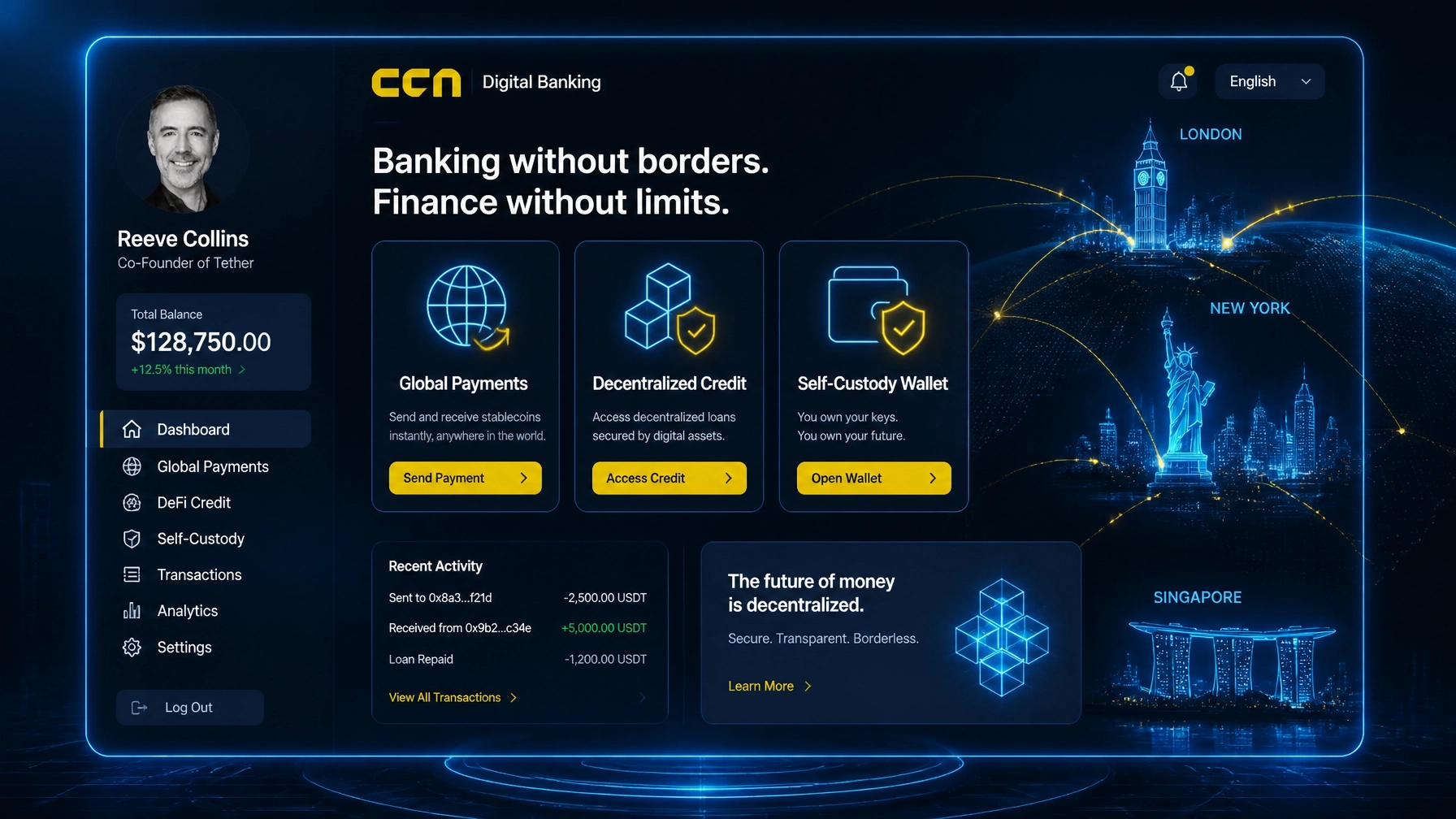
Founded by visionaries like Reeve Collins: the co-founder of Tether: WeFi is building the infrastructure that will allow anyone with a smartphone to access a full suite of banking services.
BridgeToWeb3 is proud to be a partner and investor in WeFi because we’ve seen the power of this technology firsthand. We aren't just here to watch the future happen; we’re here to help you be a part of it.
How to Get Started
The transition from traditional banking to a Deobank might feel a bit intimidating, but it’s easier than you think.
- Educate Yourself: Start by reading our DeFi 101 guide.
- Learn About Stablecoins: Understand why they are the backbone of this new system.
- Join the Community: Follow our updates as we roll out more resources and access to the WeFi ecosystem.

The future of finance isn't a building on Wall Street: it’s an app on your phone that you control. It’s transparent, it’s global, and it’s finally fair.
Are you ready to bridge to the future?
Join us at BridgeToWeb3 and start your journey toward financial freedom today.