Have you ever wondered why, in a world where you can send a video to someone across the globe in seconds, it still takes days for a bank to process a simple wire transfer? Or why you need "permission" from a branch manager to access your own hard-earned money?
The way we handle money is undergoing a massive shift. At Bridge to Web3, we believe the future of money isn't just digital, it’s decentralized. If you’ve heard the term "DeFi" (short for Decentralized Finance) but weren't sure what it meant, you’re in the right place.
This guide will break down the basics of DeFi in plain English, so you can decide if this new world of "decentralized banking" is right for you.
What Exactly is DeFi?
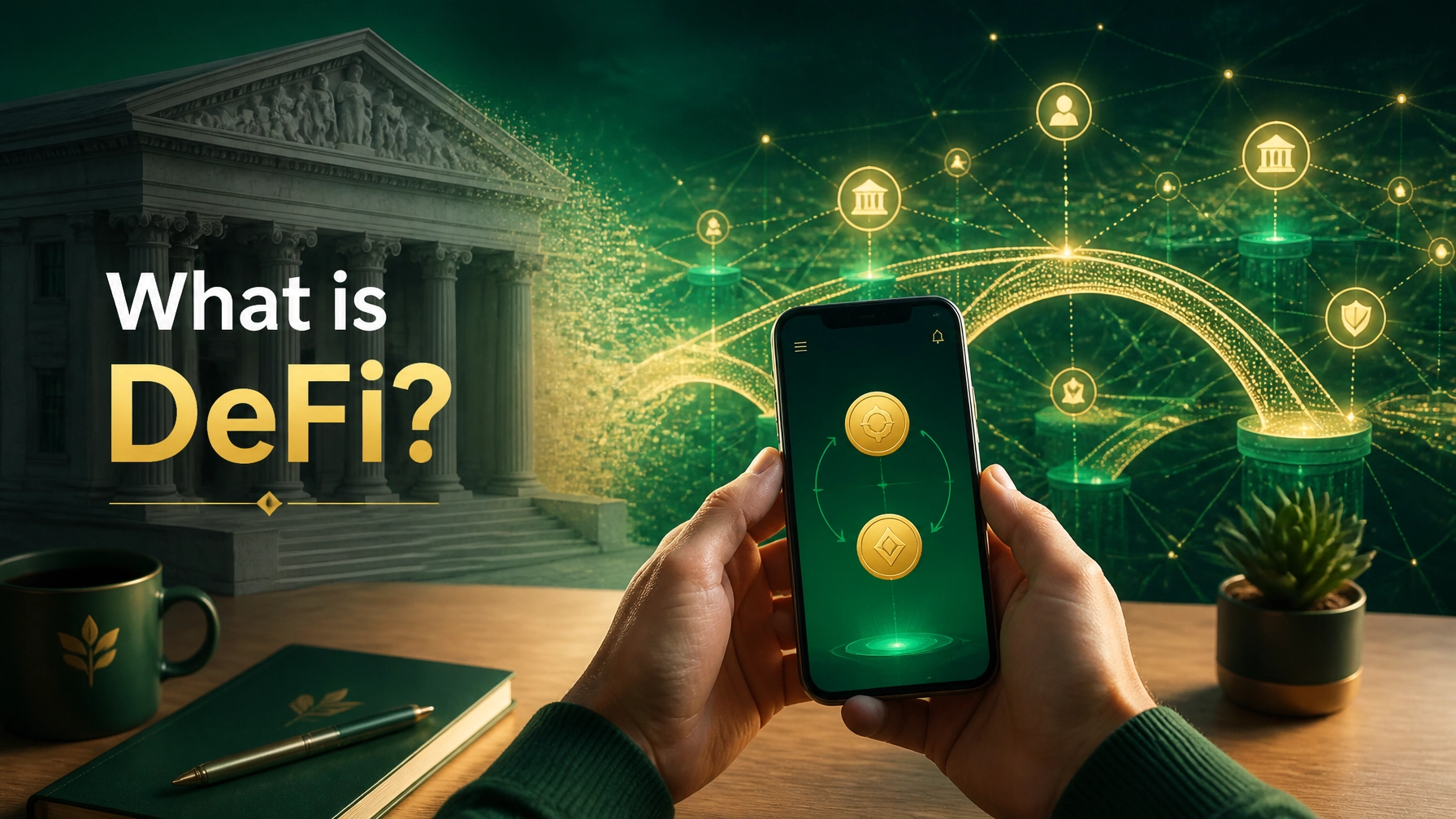
In the simplest terms, DeFi is a way to handle financial transactions, like lending, borrowing, and trading, without a middleman.
Think about how you usually buy a car or get a loan. You go to a bank, fill out piles of paperwork, wait for an "approval," and then the bank takes a cut of the transaction for their service. In the DeFi world, the "bank" is replaced by software code called Smart Contracts.
These smart contracts are hosted on a blockchain (a secure, digital ledger). They act like a digital vending machine: you put in the right "coins" and follow the rules, and the machine automatically gives you what you’re looking for. There’s no manager to talk to, no credit check, and the "vending machine" is open 24/7, 365 days a year.

Why is Everyone Talking About It?
The core appeal of DeFi is Financial Independence. For decades, we’ve relied on centralized systems to tell us what we can and cannot do with our money. DeFi flips the script and allows you to "be your own bank."
Here are the three big reasons people are moving toward decentralized systems:
- Global Access: As long as you have an internet connection, you can use DeFi. It doesn't matter if you’re in a skyscraper in New York or a small village in the mountains.
- Full Control: In a traditional bank, they "hold" your money for you. In DeFi, your assets stay in your digital wallet. You are the only person with the keys.
- Transparency: Every transaction is recorded on a public blockchain. While your identity remains private, the movement of funds is visible and verifiable by anyone. This prevents the kind of "behind-the-scenes" accounting tricks that have led to banking crises in the past.
The Building Blocks of Your Digital Bank
If you’re just starting out, DeFi can feel like a giant jigsaw puzzle. Let’s look at the three most common ways people use it:
1. Decentralized Exchanges (DEXs)
Imagine a stock exchange where there is no company in charge. A DEX allows you to swap one digital asset for another directly with other users. It’s fast, often cheaper, and you never have to hand over your assets to an exchange for safe-keeping.
2. Lending and Borrowing
In the "old" world, you save money at a bank, and they pay you a tiny bit of interest. Then, they lend that same money to someone else at a much higher rate and keep the profit. In DeFi, you can lend your digital assets directly to a "liquidity pool" and earn the interest yourself. Conversely, you can borrow assets by putting up your own digital assets as collateral.
3. Stablecoins
Because some digital assets can be like a roller coaster, "Stablecoins" were created. These are digital assets designed to stay equal to the value of a traditional currency, like the US Dollar. This makes it easier to save and spend without worrying about daily price swings.

A Balanced Look at the Risks
At Bridge to Web3, we believe in being 100% transparent. While the "be your own bank" lifestyle is empowering, it also comes with a new set of responsibilities.
- No "Reset Password" Button: In a traditional bank, if you lose your card, you call the bank. In DeFi, if you lose your "private keys" (your digital password), no one can recover them for you.
- Technology Risks: Because DeFi runs on code, if that code has a bug, it could be exploited by hackers. This is why we always recommend sticking to well-established platforms.
- Market Volatility: Prices in the digital asset world can go up and down quickly. Never put in more than you can afford to lose.
- No FDIC Insurance: Unlike a traditional US bank, your digital assets are not insured by the government.
Your "Safe Start" Checklist
Ready to explore? Here is a simple, risk-aware way to begin your journey into decentralized finance:
- Educate First, Invest Later: Don't rush. Attend our free Zoom calls to see how others are doing it.
- Get a Secure Wallet: Start with a reputable, non-custodial wallet where you hold the keys.
- Start Small: If you decide to try a DeFi platform, start with an amount of money that wouldn't change your life if it disappeared. Think of it as "tuition" for your financial education.
- Do Your Own Research (DYOR): Don't follow "hype" on social media. Look for projects with a long track record and a transparent team.
- Use Stablecoins: If you're nervous about price swings, start by exploring how stablecoins work.
Frequently Asked Questions (FAQ)
Is DeFi legal?
In most parts of the world, yes. However, regulations are constantly changing. Always check your local laws before getting started.
Do I need a lot of money to start?
Not at all. One of the best things about DeFi is that you can start with as little as $10 or $20.
Is DeFi the same as Bitcoin?
Not exactly. Bitcoin is a digital asset (often called "digital gold"). DeFi is the infrastructure (the banks, the loans, the exchanges) built on top of blockchain technology that allows you to use those assets.
How do I get my money back into my regular bank?
Most people use an "on-ramp/off-ramp" service or a centralized exchange to swap their digital assets back into traditional currency and send it to their bank account.
Important Disclaimers
The information provided on this website and in our educational sessions is for educational and informational purposes only and should not be considered financial, investment, or legal advice. Bridge to Web3 and associated platforms like WeFi are not banks and are not FDIC insured. Digital assets and decentralized finance (DeFi) involve significant risk, including the potential loss of principal. Past performance is not indicative of future results, and no guarantees of earnings or profit are made. Always perform your own due diligence and consult with a qualified professional before making any financial decisions.
Ready to Learn More? Join Our Free Educational Zoom Calls!
Mark Your Calendar! Every Monday and Thursday at 8:00 PM ET / 7:00 PM CT.
Learn directly how to navigate the world of digital finance and decentralized banking in a simple, no-hype environment.
Call to action (safe next step)
Sign up for your free decentralized account. Visit Our Website: bridgetoweb3.com.