
Let’s be honest: we’ve all been there. You try to send money to a friend or a business partner across the border on a Friday afternoon, only to realize you’ve missed the "bank cutoff." Your money sits in limbo over the weekend, and by the time it arrives on Tuesday, you’ve paid a hefty wire fee and lost a chunk of the value to a poor exchange rate.
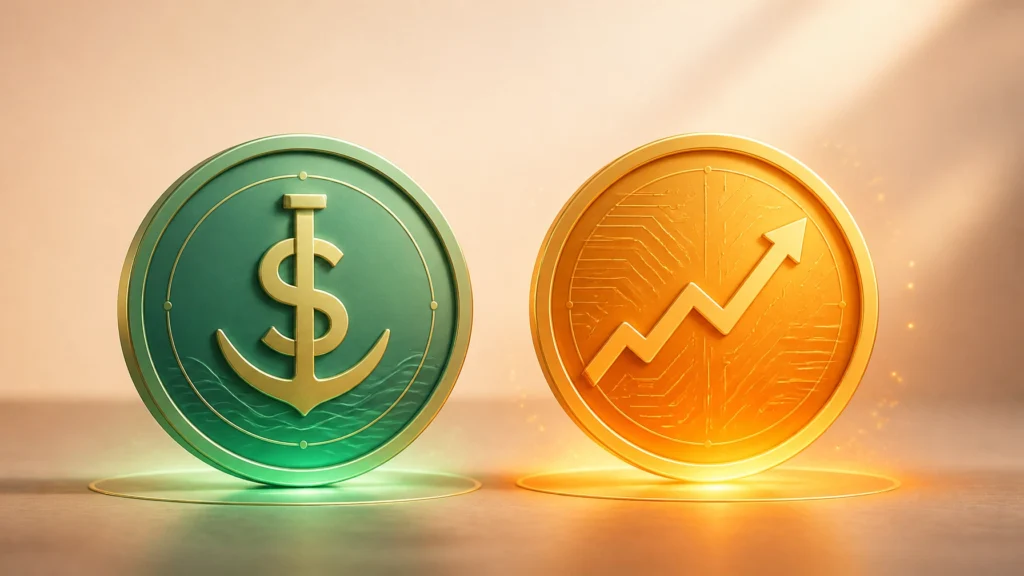
In 2026, the way we handle money is changing fast. We are no longer stuck with the slow, rigid systems of the past. Today, the choice between stablecoins vs traditional banking is one that every modern professional and entrepreneur needs to consider.
Are you looking for the safety and familiarity of a traditional bank, or are you ready to embrace the freedom and efficiency of digital money management? Let’s break it down in plain English so you can decide what’s best for your daily life.
The Old Guard: What is Traditional Banking?
We all know how traditional banks work. They’ve been around for centuries, and for a long time, they were the only game in town. You put your money in an account, and the bank promises to keep it safe. In return, they use your money to fund loans and investments, while giving you access to tools like debit cards, checks, and wire transfers.
Traditional banking is centralized. This means a single institution: your bank: controls your access to your funds. If they decide to freeze your account, change their fees, or close their doors for a holiday, you’re stuck.
While banks offer some level of protection and insurance, they also come with a lot of "red tape." Between monthly maintenance fees, overdraft charges, and the slow pace of domestic and international transfers, many people are starting to feel that the traditional system is more of a hurdle than a help.
The New Frontier: What are Stablecoins?
If traditional banking is the horse and buggy, stablecoins are the electric car.
Stablecoins are a type of digital currency (crypto) that is "pegged" to a stable asset, usually the US Dollar. This means that 1 unit of a stablecoin (like USDT or USDC) is designed to always be worth exactly $1.00. Unlike Bitcoin, which can swing wildly in value overnight, stablecoins are built for daily use.
When you use stablecoins, you are stepping into the world of DeFi (Decentralized Finance). In this world, there is no "bank manager" who needs to approve your transaction. You hold your money in your own digital wallet, and you can send it to anyone, anywhere in the world, at any time of day or night.
The Head-to-Head Comparison
To help you choose the right path for your digital money management, let’s look at how these two systems compare in the areas that matter most.
1. Speed: Seconds vs. Days

When you send money through a traditional bank, especially an international wire, it often has to pass through several "intermediary banks" before it reaches its destination. Each stop adds time and cost. It’s a bit like taking a flight with three layovers.
Stablecoins, on the other hand, move on the blockchain. Transactions typically settle in seconds or minutes. Whether it’s 2 PM on a Tuesday or 2 AM on a Sunday, the speed remains the same.
Winner: Stablecoins.
2. Cost: Pennies vs. Percentage
Have you ever looked at the fees for an international wire transfer? Between the $25-$50 flat fee and the hidden 3% markup on the exchange rate, it can get expensive very quickly. Even domestic transfers can come with annoying "convenience" fees.
Because stablecoins are peer-to-peer, you cut out the middleman. You might pay a small "network fee" to the blockchain (often just a few cents or a couple of dollars), but you aren’t paying a bank for the privilege of moving your own money. For anyone doing business globally, the savings can add up to thousands of dollars a year.
Winner: Stablecoins.
3. Control: "Be Your Own Bank"
This is where the real difference lies. In a traditional bank, you are essentially "loaning" your money to the bank. They decide when you can access it, how much you can withdraw, and what you can spend it on.
With stablecoins and a private wallet, you are the bank. You have total control over your assets. No one can freeze your account, and you don’t need to ask for permission to move your money. This level of financial freedom is the cornerstone of why we do what we do here at WeFi. We believe everyone should have the power to manage, store, and move their money independently of centralized government control.
Winner: Stablecoins.
4. Accessibility and Ease of Use

Traditional banks require a lot of paperwork. You need an ID, a proof of address, and sometimes a minimum deposit just to get started. For millions of people around the world, opening a bank account is actually quite difficult.
Stablecoins only require a smartphone and an internet connection. This makes them incredibly accessible for the global workforce. However, there is a learning curve. Understanding how to set up a wallet and secure your "private keys" is a new skill. That’s why education is so important: and why we focus on making these complex technologies simple for everyone.
Winner: Traditional Banking (for familiarity), Stablecoins (for global access).
Why "Being Your Own Bank" Matters in 2026
The world is becoming more global and more digital every day. Whether you are a freelancer working for clients in three different countries or an entrepreneur looking to protect your wealth from local currency inflation, the old way of banking is no longer enough.
Being your own bank isn't just a catchy phrase; it’s about security and independence. When you control your own assets, you are protected from the risks of bank failures or sudden policy changes that might lock you out of your accounts. You gain the ability to move your wealth across borders without friction, giving you true global financial mobility.
Making the Switch: How to Start Small
You don’t have to close your bank account tomorrow to start benefiting from stablecoins. Most people start with a "hybrid" approach:
- Get Educated: Learn the basics of how digital wallets work.
- Start Small: Move a small amount of money into a stablecoin like USDT or USDC to see how it works.
- Use it for Global Payments: The next time you need to pay someone overseas, try using a stablecoin. You’ll be amazed at the speed and the low cost.
- Secure Your Assets: Make sure you use a reputable platform and keep your security settings tight.

Final Thoughts: The Future is Yours
Traditional banking isn't going away, but it is no longer the only option. For those who value speed, low costs, and: most importantly: control over their own wealth, stablecoins are the clear winner for daily money management.
At WeFi, we are here to help you navigate this new world. We provide the tools and education you need to step away from the limitations of the old system and start living a life of financial freedom.
Ready to take control of your money?
The first step to being your own bank is getting started with the right platform.
👉 Join the WeFi community and register here to start your journey toward digital financial independence.
Still have questions?
We know that moving your money into a new system can feel like a big step. If you need more help or want a personalized walkthrough on how to use these tools safely, we’re here for you.
📅 Book a call with us here and let's chat about how you can start powering up your financial freedom today.