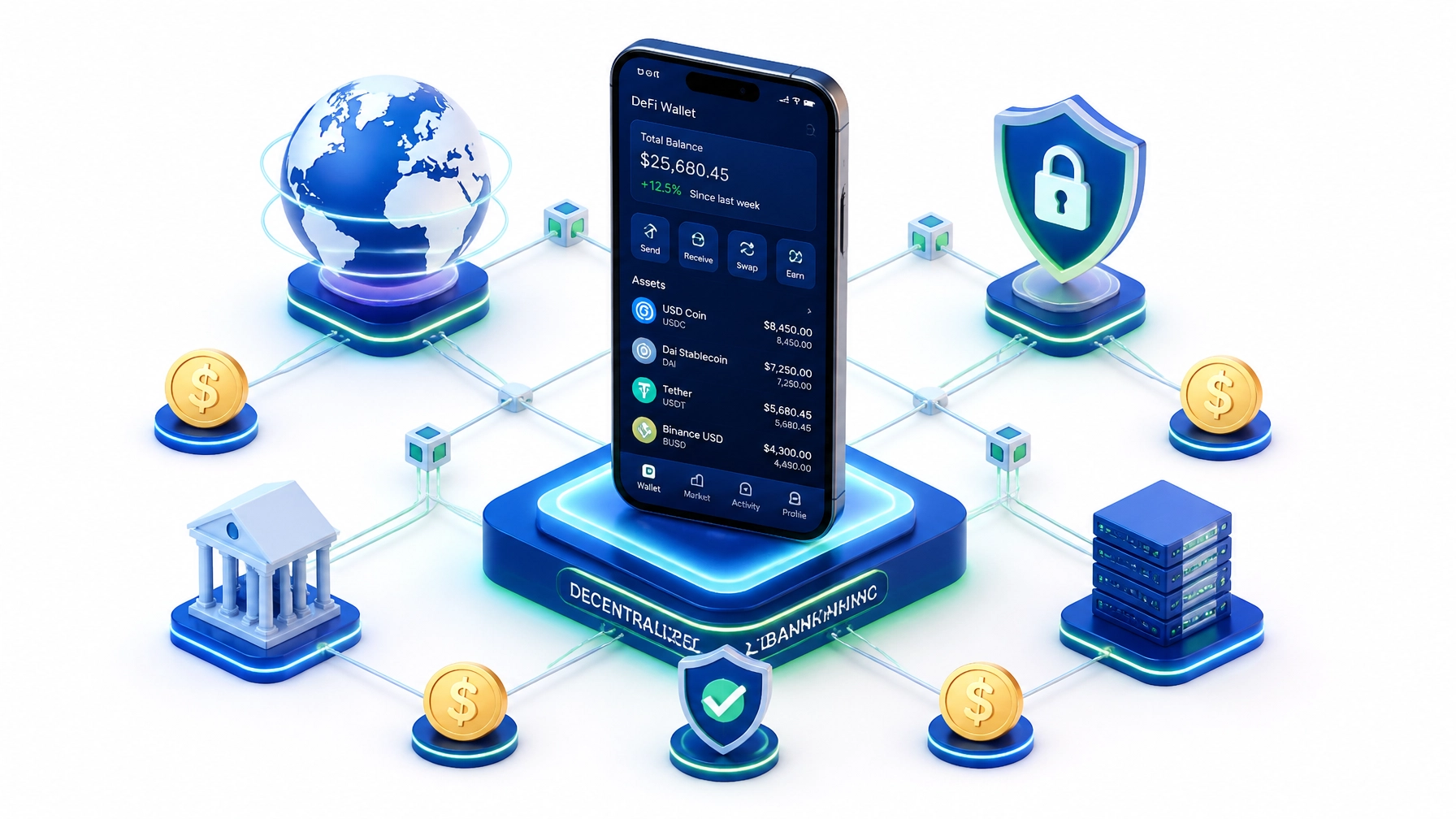
Ever feel like your money isn’t really yours? You work hard for it, but the moment it hits your bank account, it feels like it’s behind a velvet rope. There are fees for moving it, limits on when you can access it, and "business hours" that seem to belong in the 1950s. If you’ve ever tried to send money abroad on a Friday afternoon or wondered why your savings account earns 0.01% while the bank makes billions, you’re not alone.
The world is changing. We’re moving into an era where you don’t just "have an account", you become the bank. This is the heart of Decentralized Banking, or what we call DeoBanking. It’s about taking the power back from traditional institutions and putting it exactly where it belongs: in your hands.
In this guide, we’re going to break down what decentralized banking is, why it matters, and how you can start your journey toward true financial freedom.
What Exactly is Decentralized Banking?
To understand decentralized banking (DeoBanking), we first have to look at the "traditional" way. In the traditional system, a central bank or a commercial bank acts as the middleman for everything. They verify who you are, they hold your funds, they approve your transfers, and, crucially, they can say "no."
Decentralized Banking flips the script. Instead of a building with a vault and a CEO, decentralized finance (DeFi) uses technology called a blockchain. Think of a blockchain as a digital, transparent ledger that everyone can see but no one can "cheat."
In this system:
- You are the custodian: You hold your own money in a digital wallet.
- The code is the middleman: "Smart contracts" (programs that automatically execute rules) handle the transactions.
- No gatekeepers: As long as you have an internet connection, you have access. No credit checks, no "branch visits," and no permission required.

Why the World is Moving to DeoBanking
Why are millions of people shifting toward this new way of managing wealth? It’s not just about the technology; it’s about the philosophy of asset control.
1. Global Accessibility
Traditional banks are often local or regional. If you move across borders, your credit history doesn't always follow you, and opening a new account can be a nightmare. Decentralized banking is global by default. Whether you’re in New York, Nairobi, or Tokyo, the system works exactly the same way.
2. Financial Freedom (Be Your Own Bank)
When you "be your own bank," you aren't relying on a government or a corporation to keep your money safe or accessible. You have a private "key" to your funds. As long as you have that key, your money is yours to move, spend, or save 24/7/365.
3. Lower Fees and Better Efficiency
Traditional banks have massive overhead: buildings, staff, and old computer systems. They pass those costs on to you. By removing the middlemen and using automated technology, decentralized systems can operate much more efficiently, often resulting in lower transaction costs.
The Secret Sauce: Stablecoins
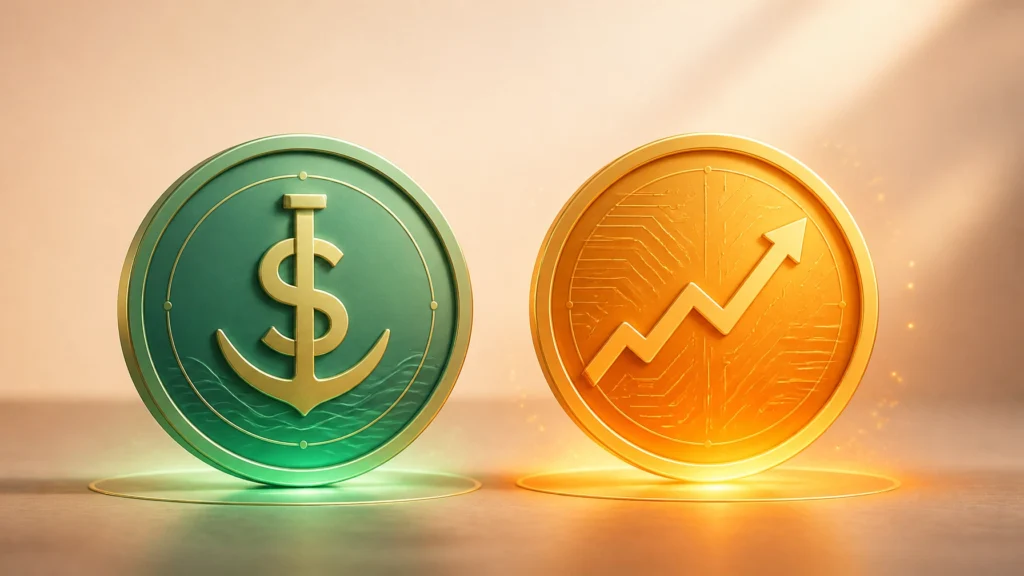
You might have heard that "crypto" is volatile: up one day, down the next. That’s why the backbone of modern decentralized banking isn't just Bitcoin; it’s Stablecoins.
A stablecoin is a digital asset designed to keep a steady value, usually pegged 1:1 to the US Dollar. Imagine having the speed and borderless nature of the internet, but the stability of the dollar. That’s a stablecoin.
For beginners, stablecoins are the perfect "on-ramp." You can move your money into a digital dollar, hold it in your own wallet, and use it to pay for services or earn rewards without worrying about the price of the asset swinging wildly overnight.

How to Get Started: Your Practical Checklist
Taking your first steps into DeoBanking can feel like learning a new language. But don't worry: it’s easier than it looks. Here is a simple checklist to get you moving:
- Educate Yourself First: Before moving a single dollar, understand the basics. Watch a few videos or attend a financial education session to get the lay of the land.
- Set Up a Digital Wallet: Choose a reputable, non-custodial wallet. This is your personal "vault." Remember: "Not your keys, not your coins."
- Secure Your Seed Phrase: When you create a wallet, you'll get a 12-24 word "seed phrase." Write this down on paper and hide it. NEVER share it with anyone.
- Start Small: Use a trusted exchange to convert a small amount of traditional currency into a stablecoin (like USDC or DAI).
- Do a Test Transfer: Send a tiny amount of your stablecoin to your new wallet to make sure you've got the hang of it.
- Explore the Ecosystem: Once your funds are in your wallet, you can look into decentralized apps (dApps) for saving or peer-to-peer payments.
Understanding the Risks (The "Real Talk" Section)
At WeFi DeoBanking, we believe in being 100% transparent. With great power comes great responsibility. Decentralized banking is a frontier, and it’s important to stay alert.
- You are the IT Department: If you lose your seed phrase, there is no "Forgot Password" button. Your funds could be lost forever.
- Smart Contract Risk: The technology is code, and code can sometimes have bugs.
- Volatility and Pegs: While stablecoins aim to stay at $1.00, they are not guaranteed. Market conditions can cause fluctuations.
- No FDIC Insurance: Unlike a traditional US bank account, digital assets are not insured by the government.
The Golden Rule: Never put in more than you can afford to lose while you are learning. Treat this as an educational journey.

FAQ: Common Questions from Beginners
Is decentralized banking legal?
In most parts of the world, holding and using digital assets is perfectly legal. However, regulations are always evolving. It’s always a good idea to check the specific rules in your country.
Do I need a lot of money to start?
Not at all! One of the best parts of DeoBanking is that it’s highly divisible. You can start with $10 or $20 just to see how the system works.
How do I turn my digital money back into "real" money?
You can use a "centralized exchange" or an off-ramp service to convert your stablecoins back into your local currency and send them to your traditional bank account whenever you need.
Is it hard to learn?
It’s different, but not necessarily "hard." If you can use a smartphone and an app, you can learn to use a digital wallet. Like anything new, it just takes a bit of practice.
Final Thoughts: The Power is Yours
The shift toward decentralized banking isn't just a trend: it's an evolution of how we think about value. For the first time in history, we have the tools to manage our wealth globally, instantly, and independently.
At WeFi DeoBanking, our mission is to make this transition as smooth as possible. We’re here to provide the education and the bridge you need to move from the old world of "permissioned finance" to the new world of "financial freedom."
Ready to stop being just an "account holder" and start being your own bank? The future of money is here, and it’s waiting for you.
Start Your Journey Today
Ready to dive deeper? Check out our Introduction to Digital Assets guide or join our next community session to ask your questions live. Let's build your financial future together.
Disclaimer: The content provided in this blog is for educational and informational purposes only and does not constitute financial, investment, or legal advice. WeFi DeoBanking is not a bank. Digital assets are not FDIC-insured and carry significant risks, including the total loss of value. Users should conduct their own research and consult with a professional advisor before making any financial decisions. No guarantees of earnings or returns are made.