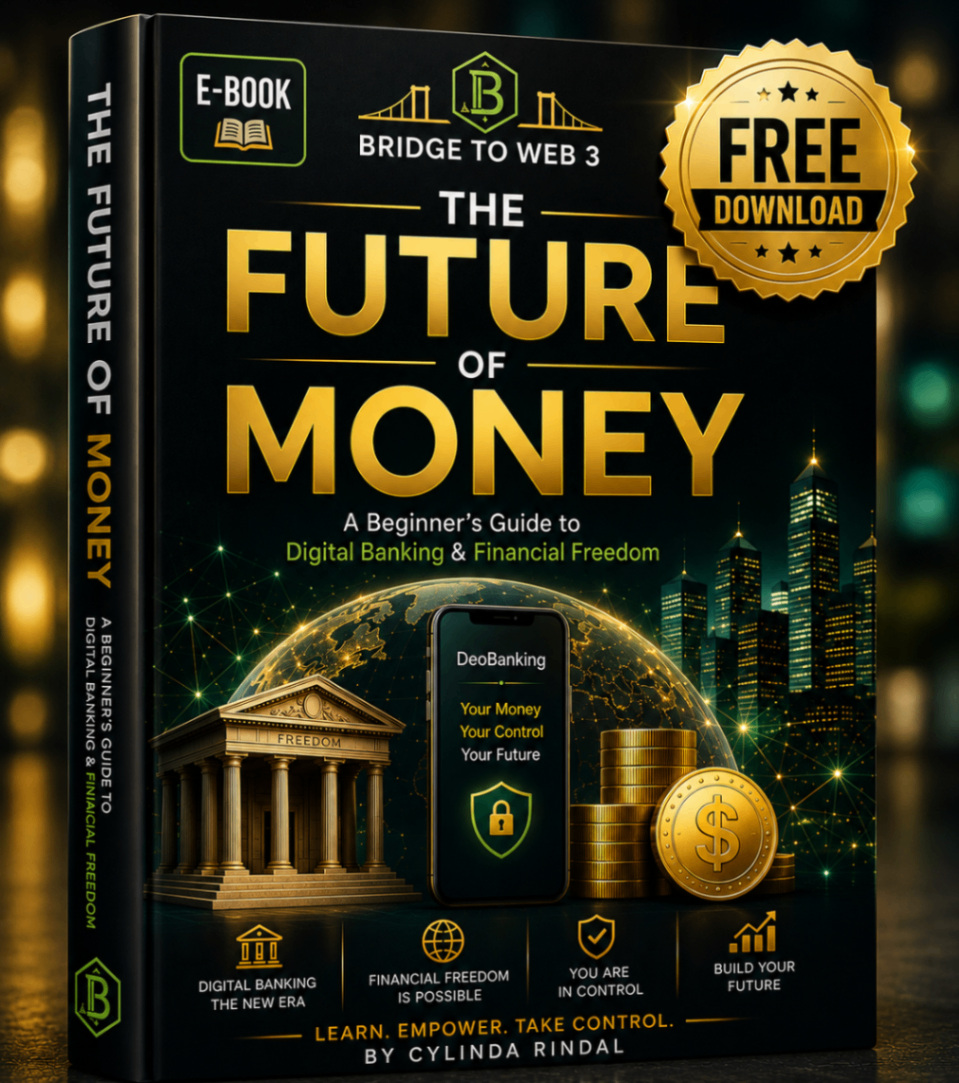
SEO title: Be Your Own Bank: Understanding Self-Custody, Stablecoins, and DeFi
Meta description: Learn what “be your own bank” means with digital assets, self-custody, stablecoins, and DeFi: plus the benefits, risks, and steps to get started safely.
The phrase “be your own bank” is often used when people talk about digital assets and decentralized finance. It can sound exciting, but it can also be confusing.
Does it mean closing your bank account? Keeping all your money in cryptocurrency? Avoiding every financial institution? Not necessarily.
In simple terms, being your own bank means having more direct control over how you store, access, and move some of your money. Instead of relying entirely on a centralized bank or payment provider, you may use digital wallets, stablecoins, and blockchain-based financial tools.
That freedom comes with responsibility. When you control your own assets, you also become responsible for security, record-keeping, transaction decisions, and protecting access to your funds.
Let’s look at what the idea really means: and what it does not mean.

What does “be your own bank” mean?
In traditional banking, a financial institution usually holds your money on your behalf. You access your account through an app, card, ATM, or branch, but the bank manages the account infrastructure.
The bank may also:
- Approve or delay certain transactions
- Freeze or close an account
- Set withdrawal and transfer limits
- Operate only during certain processing windows
- Charge fees for specific services
- Decide how deposits are managed within the banking system
Digital assets can offer another model. With a self-custody wallet, you hold the access credentials that control your assets. These credentials are often represented by a recovery phrase or private key.
In this model, there may be no customer service department that can reset your access. There may be no central institution that can reverse a transaction. You have greater control, but you also carry more of the responsibility.
So, “be your own bank” is best understood as financial self-control: not financial isolation.
The four parts of financial self-custody
1. You control access to your assets
A self-custody wallet allows you to hold digital assets without leaving them under the direct control of an exchange or other company.
This can reduce your dependence on centralized institutions. Your assets are connected to a blockchain address, and your private credentials authorize transactions.
However, self-custody must be taken seriously. If someone obtains your recovery phrase, they may be able to move your assets. If you lose the phrase and have no secure backup, recovering your funds may be impossible.
There is no “forgot password” button for a wallet that only you control.
2. You can move money using open networks
Traditional payments often depend on banks, card networks, clearing systems, and business hours. Blockchain networks operate differently. Many are available around the clock, including weekends and holidays.
This can be useful for people who:
- Send money across borders
- Work with international clients
- Receive payments from other countries
- Travel frequently
- Want an alternative to traditional transfer systems
This does not mean every transaction is instant or free. Network fees, congestion, platform policies, and local regulations can affect the experience.
Still, blockchain-based payments can give people another way to move value without depending entirely on one centralized system.
3. You can use digital financial tools directly
Decentralized finance, commonly called DeFi, refers to financial applications built with blockchain networks and automated software.
Depending on the platform, DeFi may allow users to:
- Exchange one digital asset for another
- Borrow against digital assets
- Lend assets through a protocol
- Manage collateral
- Make transactions without a traditional financial intermediary
The software that manages these activities is often called a smart contract. It is designed to follow programmed rules.
That may reduce the need for a traditional middleman, but it does not remove risk. Smart contracts can contain errors, protocols can be attacked, and users can misunderstand how the system works.
DeFi should be approached as a technology to study: not as a guaranteed income opportunity.
4. You decide how much independence you want
Being your own bank does not have to be an all-or-nothing decision.
Some people use a combination of traditional banking and digital assets. They may keep emergency savings in a bank account while using a digital wallet for international transfers or learning about blockchain-based finance.
Others may prefer to hold certain assets in self-custody while using regulated services for other needs.
The goal is not to copy someone else’s financial setup. The goal is to understand your options and make informed decisions based on your needs, experience, and risk tolerance.
Where stablecoins fit in
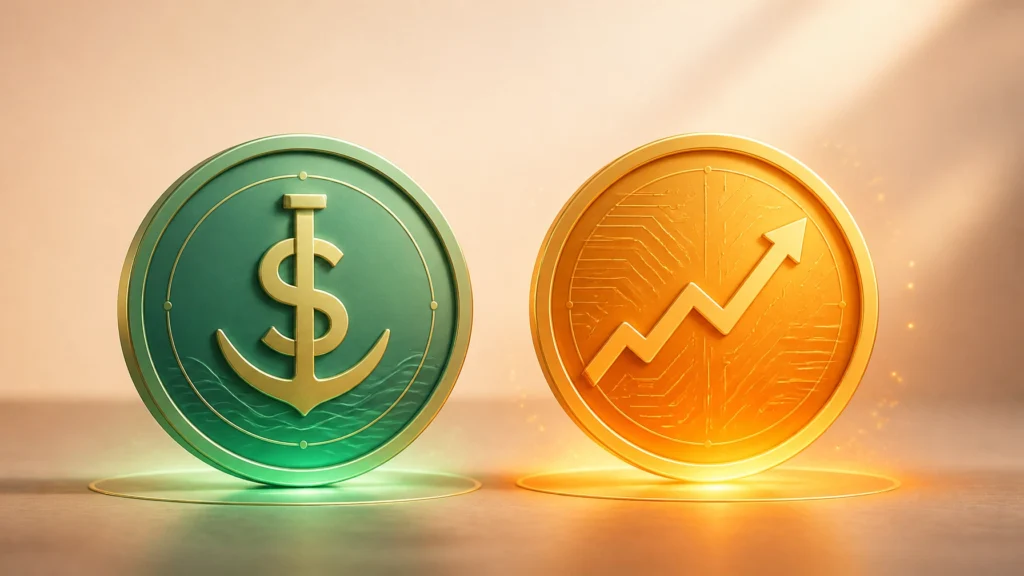
Stablecoins are digital assets designed to track the value of another asset, often the U.S. dollar.
Many people use stablecoins because they may be less volatile than assets such as Bitcoin or Ether. They can function as a digital unit of account within blockchain networks and may be used for transfers, trading, or DeFi applications.
For someone exploring the idea of being their own bank, stablecoins may offer:
- Digital access to a dollar-linked asset
- Faster movement across supported networks
- A way to transfer value internationally
- Compatibility with certain blockchain applications
But “stable” does not mean risk-free.
A stablecoin can lose its intended value, experience a temporary loss of its peg, or be affected by the financial condition and policies of its issuer. Some issuers may also have the ability to freeze specific addresses.
Stablecoins are not the same as money in an FDIC-insured checking or savings account. Digital assets held in a wallet, exchange account, or DeFi protocol are generally not FDIC-insured.
For more background, read our guide on how to use stablecoins.

The important trade-off: control versus convenience
Traditional banks provide convenience. They may offer fraud departments, account recovery, customer support, deposit insurance for qualifying accounts, and familiar payment tools.
Self-custody offers more direct control, but you must manage more of the process yourself.
Here is the basic trade-off:
| Traditional banking | Self-custody and digital assets |
|---|---|
| Institution manages account access | You manage wallet access |
| Account recovery may be available | Lost credentials may mean permanent loss |
| Some deposits may qualify for FDIC insurance | Digital assets are generally not FDIC-insured |
| Transactions may be reversible in limited cases | Blockchain transactions are usually difficult to reverse |
| Familiar tools and support | More personal responsibility and learning |
Neither model is perfect for every situation. Understanding the differences can help you choose more carefully.
Risks every beginner should understand
Digital assets carry risk. Before using a wallet, stablecoin, or DeFi application, consider the following:
- Price volatility: Many digital assets can rise or fall sharply in value.
- Self-custody risk: Losing or exposing your recovery phrase can lead to permanent loss.
- Scams and phishing: Fraudsters may imitate wallets, exchanges, support agents, and investment opportunities.
- Wrong-address risk: Sending assets to the wrong blockchain address may be irreversible.
- Platform risk: A centralized exchange or service provider may face outages, insolvency, hacks, or account restrictions.
- Stablecoin risk: A stablecoin may not always maintain its intended value.
- Smart-contract risk: Software bugs or attacks can affect DeFi protocols.
- Regulatory uncertainty: Laws and consumer protections differ by country and may change.
- Tax and record-keeping duties: Digital asset activity may create reporting responsibilities in your location.
A responsible approach is to learn first, start with small amounts, and never use money needed for essentials.
A practical “be your own bank” checklist
Before managing digital assets, ask yourself:
- Do I understand what I am buying or using?
- Am I using a reputable wallet or platform?
- Have I secured my recovery phrase offline?
- Have I enabled strong security measures, including two-factor authentication where available?
- Have I checked the network and address before sending funds?
- Have I tested the process with a small transaction?
- Do I understand the fees and risks?
- Am I keeping records of transactions?
- Do I know how I would access my assets during an emergency?
- Have I avoided promises of guaranteed returns or pressure to act quickly?
If you cannot answer these questions, take more time to learn before moving forward.

Is being your own bank right for you?
It may be worth exploring if you want more control over certain assets, need a flexible way to move money globally, or are interested in learning how blockchain-based finance works.
It may not be right for every purpose. Many people still value traditional bank accounts for bills, payroll, emergency funds, and deposit insurance where available.
A balanced approach can be practical: keep appropriate funds in familiar financial accounts while gradually learning about self-custody and digital assets.
You can begin with education through the BridgeToWeb3 Web3 guide and our explanation of decentralized banking.
Final thoughts
“Be your own bank” is not a promise that digital finance is simple, risk-free, or completely independent of institutions and governments.
It is a way to describe greater personal control over certain financial assets and transactions. That control can support financial independence and reduce reliance on centralized systems: but only when paired with knowledge, caution, and good security habits.
If you want to explore WeFi DeoBanking, you can register through this link. Remember that WeFi is not a bank, and digital assets are not the same as insured bank deposits.
For educational resources and updates, visit BridgeToWeb3 or schedule a conversation through Calendly.
This article is for educational purposes only. It is not financial, investment, legal, or tax advice. Digital assets carry risk, and you should conduct your own research or speak with a qualified professional before making financial decisions.
Ready to Learn More? Join Our Free Educational Zoom Calls!
Mark Your Calendar! Every Monday and Thursday at 8:00 PM ET / 7:00 PM CT.
Learn directly how to navigate the world of digital finance and decentralized banking in a simple, no-hype environment.
Call to action (safe next step)
Sign up for your free decentralized account. Visit Our Website: bridgetoweb3.com.