For decades, saving money meant one thing: walking into a brick-and-mortar building, shaking hands with a teller, and tucking your cash away in a vault you couldn’t see. Fast forward to today, and the "vault" is in your pocket.
But as we move further into the digital age, a new question has popped up: Where should your digital savings actually live?
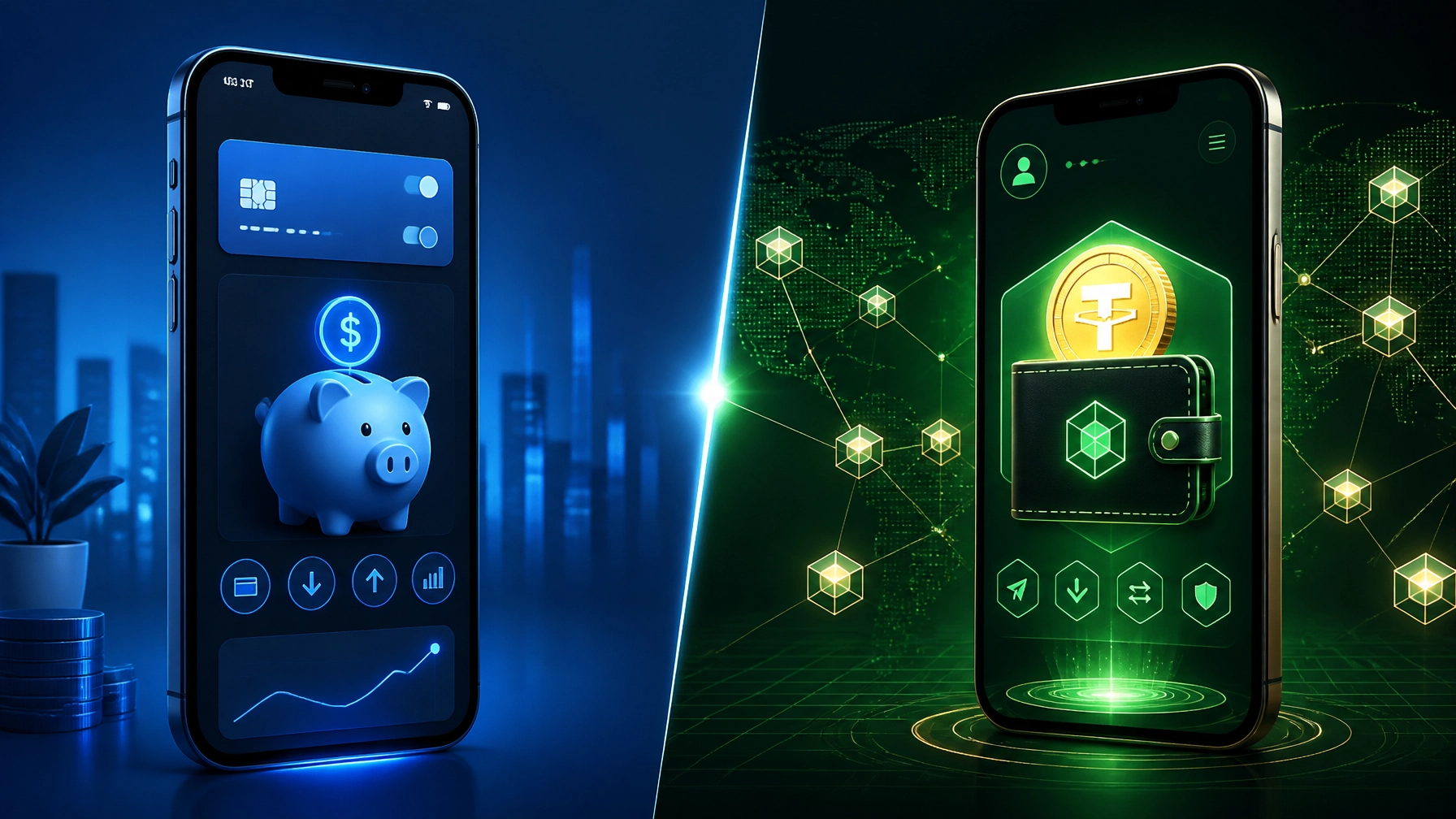
Most people are familiar with Neobanks: those sleek, app-only banks like Chime or Revolut that made us realize we never actually needed to stand in line at a branch again. But there’s a new player in town: the Deobank (short for Decentralized Bank).
At WeFi DeoBanking, we believe the future of money is about more than just a pretty app; it’s about who really controls the keys to the vault. Today, we’re breaking down the differences between Neobanks and Deobanks so you can decide which path to financial freedom fits your lifestyle.
What is a Neobank? (The "Digital Facelift")
Think of a Neobank as a traditional bank that went to finishing school. They don't have physical branches, which saves them a ton of money on rent and electricity. They pass those savings on to you in the form of lower fees and better user interfaces.
How they work:
Neobanks are fintech companies. Most of them aren't actually "banks" in the legal sense; they partner with traditional, licensed banks to hold your money. When you look at your balance in a Neobank app, you’re looking at a digital representation of money held in a centralized institution.
The Pros:
- User Experience: Their apps are usually lightyears ahead of "Old World" banks.
- Low Fees: Usually no monthly maintenance or "low balance" fees.
- Fast Onboarding: You can often open an account in minutes with just your phone.
The Cons:
- Centralized Control: They can still freeze your account or limit your transactions based on their internal policies.
- Fractional Reserve Banking: Your money is often lent out to others, meaning the bank doesn't actually have all your cash sitting in a vault at once.
What is a Deobank? (The "Financial Revolution")

A Deobank, or Decentralized Bank, isn't just a digital version of the old system: it’s an entirely new system. It uses blockchain technology and stablecoins to give you the same services (saving, sending, and managing money) without the need for a central authority to "approve" your moves.
How they work:
Instead of a corporation holding your funds, a Deobank uses "smart contracts": self-executing code on a blockchain. At WeFi, we focus on helping people navigate this world. In a Deobank environment, you are essentially "being your own bank." Your assets are often held in stablecoins (digital assets pegged to a stable value like the US Dollar), giving you global portability and 24/7 access.
The Pros:
- Total Ownership: You hold the "keys" to your money. No one can freeze your account or tell you how to spend your assets.
- Global Accessibility: You can move money across borders instantly without waiting 3-5 business days for a wire transfer to clear.
- Transparency: Every transaction is recorded on a public ledger. You don't have to wonder what the bank is doing with your money: you can see it.
The Cons:
- Personal Responsibility: Since you are in control, you are responsible for your own security (like keeping your passwords/keys safe).
- No FDIC: Unlike traditional banks, decentralized systems are not backed by government insurance.
Neobank vs. Deobank: The Head-to-Head
| Feature | Neobank | Deobank (Decentralized) |
|---|---|---|
| Control | The bank controls your access. | You control your access. |
| Speed | Fast (Digital). | Instant (Blockchain). |
| Fees | Low, but some hidden FX fees. | Minimal network fees; no middleman. |
| Asset Type | Government Fiat (USD, EUR). | Stablecoins & Digital Assets. |
| Insurance | Usually FDIC (via partner). | None (Self-custody/Risk-managed). |
| Availability | Subject to banking hours/holidays. | 24/7, 365 days a year. |
Why "Being Your Own Bank" Matters

You might be thinking, "My Neobank app is fine, why do I need a Deobank?"
The answer lies in independence. In a Neobank, your "digital savings" are still part of the centralized financial web. If the banking system faces a hiccup, or if the government decides to tighten controls, your access to your own hard-earned money could be restricted.
DeoBanking is about Global Asset Control. It’s about the person who wants to travel the world and know their money is just as accessible in Tokyo as it is in Texas. It’s about the entrepreneur who is tired of waiting for "approval" to move their own capital.
At WeFi, we emphasize education because we know this shift is big. Moving from a system where "the bank handles it" to one where "you handle it" requires a bit of a learning curve, but the reward is true financial freedom.
Stablecoins: The Secret Sauce of Deobanking
One of the biggest hurdles for people entering the world of decentralized banking is volatility. Nobody wants their savings to drop 20% in value overnight.
That’s where stablecoins come in. These are digital assets designed to stay at a 1:1 value with a stable currency (like the USD). They give you the speed and independence of blockchain technology without the "rollercoaster" prices of traditional cryptocurrencies. They are the perfect entry point for anyone looking to transition their digital savings into a more independent system.
The Risk Reality Check

We’re all about education here, and that means being honest about risks.
- Technology Risk: While blockchain is secure, the "smart contracts" or platforms you use can have bugs.
- No Safety Net: If you lose your private keys in a fully decentralized setup, there is no "forgot password" button to call.
- Regulatory Changes: Governments are still figuring out how to categorize digital assets, which can lead to shifts in how platforms operate.
This is why WeFi DeoBanking focuses on simplifying these technologies. We want to help you understand the "how" and "why" before you ever move a single cent.
Your "Go Digital" Checklist
If you’re ready to start exploring the world of decentralized savings, here’s a quick roadmap:
- Educate Yourself First: Don't jump into anything you don't understand. Read our other blog posts or join a community session.
- Understand Custody: Decide if you want a "managed" experience or if you’re ready for full "self-custody."
- Start Small: Never move more than you are comfortable with while you are learning the ropes.
- Check the Stablecoin: Research which stablecoins a platform uses. Are they transparent about their reserves?
- Secure Your Connection: Always use two-factor authentication (2FA) and avoid managing your digital savings on public Wi-Fi.
Frequently Asked Questions (FAQ)
1. Is a Deobank safer than a Neobank?
"Safe" is relative. A Neobank is safer from a "government insurance" perspective (FDIC). A Deobank is safer from a "control" perspective: no one can take your money or stop you from using it.
2. Do I need a lot of money to start?
Not at all. One of the best things about decentralized banking is that it’s permissionless. You can start learning and using the technology with very small amounts.
3. Is WeFi a bank?
No. WeFi is an educational platform and a bridge to modern digital financial solutions. We provide the tools and knowledge to help you navigate decentralized banking systems, but we are not a traditional, FDIC-insured bank.
Final Thoughts: The Choice is Yours
The "best" option depends on what you value most. If you want the convenience of a modern app with the safety net of the old banking system, a Neobank is a great choice.
But if you are looking for true independence, global portability, and the ability to "be your own bank" without centralized oversight, the Deobank model is the future.
At WeFi DeoBanking, we’re here to help you bridge that gap. The world of finance is changing: don't get left behind at the branch.
Ready to start your journey into the future of money?
Join our next educational session and learn how to navigate the world of stablecoins and decentralized banking with confidence.
Disclaimer: This content is for educational and informational purposes only and does not constitute financial, investment, or legal advice. Digital assets, including stablecoins and decentralized finance (DeFi) protocols, involve significant risk, including the potential loss of principal. WeFi DeoBanking is not a bank, and assets held in decentralized systems are not insured by the FDIC or any government agency. There are no guarantees of profit or protection against loss. Always perform your own due diligence before participating in any financial system.