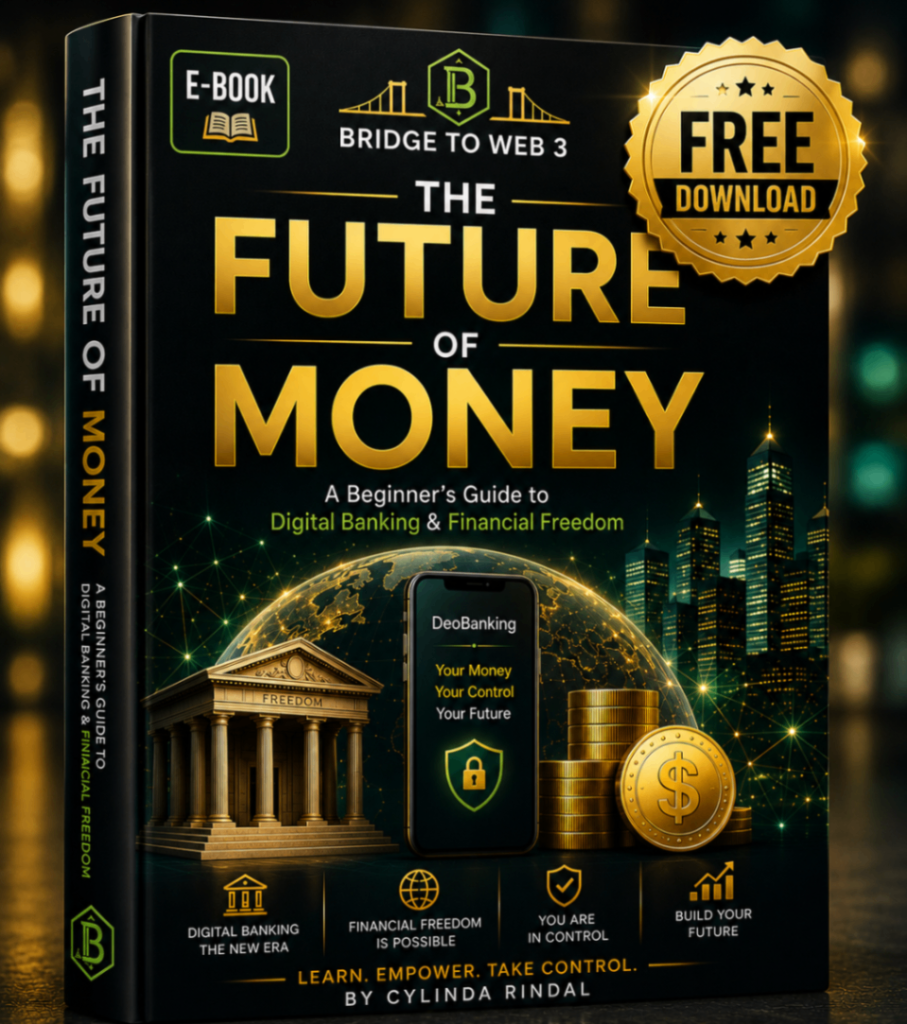

If you’ve ever felt like your money isn't truly "yours", perhaps because of bank holidays, transaction delays, or those mysterious monthly fees, you aren't alone. For decades, the world of finance has been locked behind the doors of massive institutions. We give them our money, and in return, they decide when, where, and how we can use it.
But the tide is shifting. A new era of finance, often called Decentralized Finance (DeFi) or DeoBanking, is putting the power back into the hands of the individual. At its core, decentralized banking is about one thing: freedom. It’s about having the tools to manage your assets without needing a middleman to give you permission.
Whether you're a curious professional or an entrepreneur looking for a more flexible way to move money globally, this guide will walk you through the basics of how this new digital economy works.
Breaking Free from the "Middleman"
In traditional banking, every transaction you make goes through a central authority. When you swipe your card at a coffee shop or send money to a friend, a bank must verify that you have the funds and then manually (or through their private software) update their ledgers. They act as the gatekeeper.
Decentralized banking flips this script. Instead of a bank holding the ledger, the ledger is held by a global network of computers. This is known as the blockchain.
When you use decentralized systems, you aren't asking a bank for permission to move your money. You are interacting directly with a protocol, a set of rules written in code, that executes your transaction instantly and transparently. No branch manager, no "processing" wait times, and no closed doors on weekends.
What Exactly is Decentralized Banking?

Decentralized banking (or DeoBanking) refers to financial services built on public blockchains. It’s a way to save, send, and manage assets using technology instead of traditional brick-and-mortar institutions.
If you want a simple visual explanation before going deeper, watch this beginner-friendly video:
While "DeFi" is the broad industry term, at WeFi DeoBanking, we focus on the practical application of these tools for everyday people. It’s about simplifying these complex technologies so you can use them to manage your digital life more efficiently.
Think of it as a digital toolkit that allows you to:
- Store assets in a digital wallet that only you can access.
- Send money globally in minutes, regardless of borders.
- Exchange assets directly with others through peer-to-peer networks.
- Earn rewards by providing liquidity to the network, without a bank taking a massive cut of the interest.
The Three Pillars: Blockchain, Wallets, and Smart Contracts
To understand how to navigate this world, you need to know the three basic components that make it all work.
1. The Blockchain (The Ledger)
Imagine a giant notebook that everyone in the world can see, but no one can erase. Every time money moves, it’s written in this notebook. Because thousands of computers around the world have a copy of this notebook, it’s virtually impossible to "fake" a transaction. This is the blockchain. It provides the transparency and security that traditional banks try to provide, but without the central point of failure.
2. Digital Wallets (Your Gateway)
In the old world, you had a bank account. In the decentralized world, you have a wallet. A digital wallet isn't like a physical one; it doesn't "store" your money. Instead, it stores your private keys, essentially your ultra-secure digital signature. As long as you have your keys, you have access to your assets on the blockchain from anywhere in the world.
3. Smart Contracts (The Automated Banker)
How do you lend or trade without a bank employee? You use Smart Contracts. These are tiny programs that live on the blockchain. They say, "If Person A sends X, then send Person B Y." They are self-executing and impartial. They don’t care who you are or where you live; they only care that the rules of the contract are met.

Stablecoins: Your Anchor in the Digital Sea
One of the biggest hurdles for people entering digital finance is the "rollercoaster" nature of some digital assets. This is where stablecoins come in.
A stablecoin is a type of digital asset designed to maintain a stable value, usually pegged 1:1 to a traditional currency like the U.S. Dollar. For example, 1 USDC or 1 USDT is designed to always be worth $1.
Stablecoins are the "bridge" between the traditional financial world and the decentralized world. They allow you to enjoy the benefits of blockchain, like instant global transfers and 24/7 access, without the stress of price swings. For many beginners, using stablecoins is the best way to start "being your own bank" while keeping a familiar value for your savings.
Why "Be Your Own Bank" is a Movement, Not Just a Slogan

The phrase "Be Your Own Bank" is at the heart of the decentralized movement. But what does it actually mean in your daily life?
It means Independence. In many parts of the world, people lose access to their funds because of local economic instability or banking crises. In the decentralized world, your assets are not tied to the health of a single company or even a single government's banking system.
It means Global Asset Control. If you want to send money to a family member in another country, you don’t have to wait three days for a wire transfer or pay exorbitant fees to a middleman. You hit "send," and the blockchain handles the rest in minutes.
At WeFi, we believe that education is the first step toward this independence. As noted in recent expert discussions on modern digital finance, the goal isn't just to use new tech, it's to understand how that tech creates a more equitable and accessible financial system for everyone.
Understanding the Risks (The Responsibility of Freedom)

With great freedom comes great responsibility. Decentralized banking is powerful, but it requires a new mindset toward security.
- You are the Guardian: In a traditional bank, if you lose your password, you call customer service. In a decentralized system, if you lose your "seed phrase" (the master key to your wallet), there is no "Forgot Password" button. Protecting your keys is your most important job.
- Smart Contract Risks: While code is impartial, it can sometimes have bugs. It’s important to use well-established protocols and platforms that have been audited by professionals.
- Market Volatility: While stablecoins aim for a 1:1 peg, the broader digital asset market can be volatile. Never move more into these systems than you are comfortable managing.
For a deeper dive into the technical safety of these systems, resources like the Ethereum DeFi Guide or Bankrate’s DeFi Overview offer excellent third-party perspectives on the risks and rewards of the space.
Your First Steps into DeoBanking: A Beginner’s Checklist
Ready to start exploring? Here is a practical checklist to help you move away from traditional banking limitations and toward digital independence.
- Educate Yourself: Read guides (like this one!) and watch tutorials on how wallets work.
- Set Up a Non-Custodial Wallet: Look into reputable wallet providers. Remember, "not your keys, not your coins."
- Start Small: Don't move your life savings on day one. Move a small amount of a stablecoin to practice sending and receiving.
- Secure Your Seed Phrase: Write down your recovery phrase on paper and store it in a physical safe. Never share it with anyone online.
- Stay Curious: The world of digital finance moves fast. Follow trusted education platforms like WeFi to stay updated on new tools and safety practices.
Frequently Asked Questions
Is decentralized banking the same as crypto?
Not exactly. Crypto (like Bitcoin) is an asset. Decentralized banking (DeFi) is the system of services, like lending, borrowing, and sending, that uses those assets to function.
Do I need a lot of money to start?
No. One of the best things about DeoBanking is that it is "permissionless." You can start with as little as $10 to learn how the systems work.
Is it legal?
In most parts of the world, using digital assets and decentralized protocols is legal, though regulations vary by country. Always check your local laws regarding digital asset management and taxes.
Can I get my money back if I make a mistake?
Usually, no. Transactions on the blockchain are "immutable," meaning they cannot be reversed. This is why education and double-checking addresses is so vital.
Educational Disclaimer: The information provided in this post is for educational and informational purposes only and should not be construed as financial, investment, or legal advice. WeFi DeoBanking is a technology and education platform, not a bank. We do not provide FDIC insurance or any other government-backed protections. Digital assets carry significant risk, including the potential loss of principal. Always perform your own due diligence before interacting with decentralized financial systems.
Ready to Learn More? Join Our Free Educational Zoom Calls!
Mark Your Calendar! Every Monday and Thursday at 8:00 PM ET / 7:00 PM CT.
Learn directly how to navigate the world of digital finance and decentralized banking in a simple, no-hype environment.
Take Control of Your Financial Future
The world of money is changing, and you don't have to be left behind. At WeFi DeoBanking, we are dedicated to making these "complex" tools simple, accessible, and human. Whether you're looking to move assets across borders or simply want to understand what it means to be your own bank, we’re here to help you navigate the journey.
Ready to learn more? Stay tuned to our blog for weekly guides on stablecoins, digital security, and the future of finance. Ready to get started? Sign up for your free decentralized account. Visit Our Website: bridgetoweb3.com.